My Favorite Aunt’s Birthday…

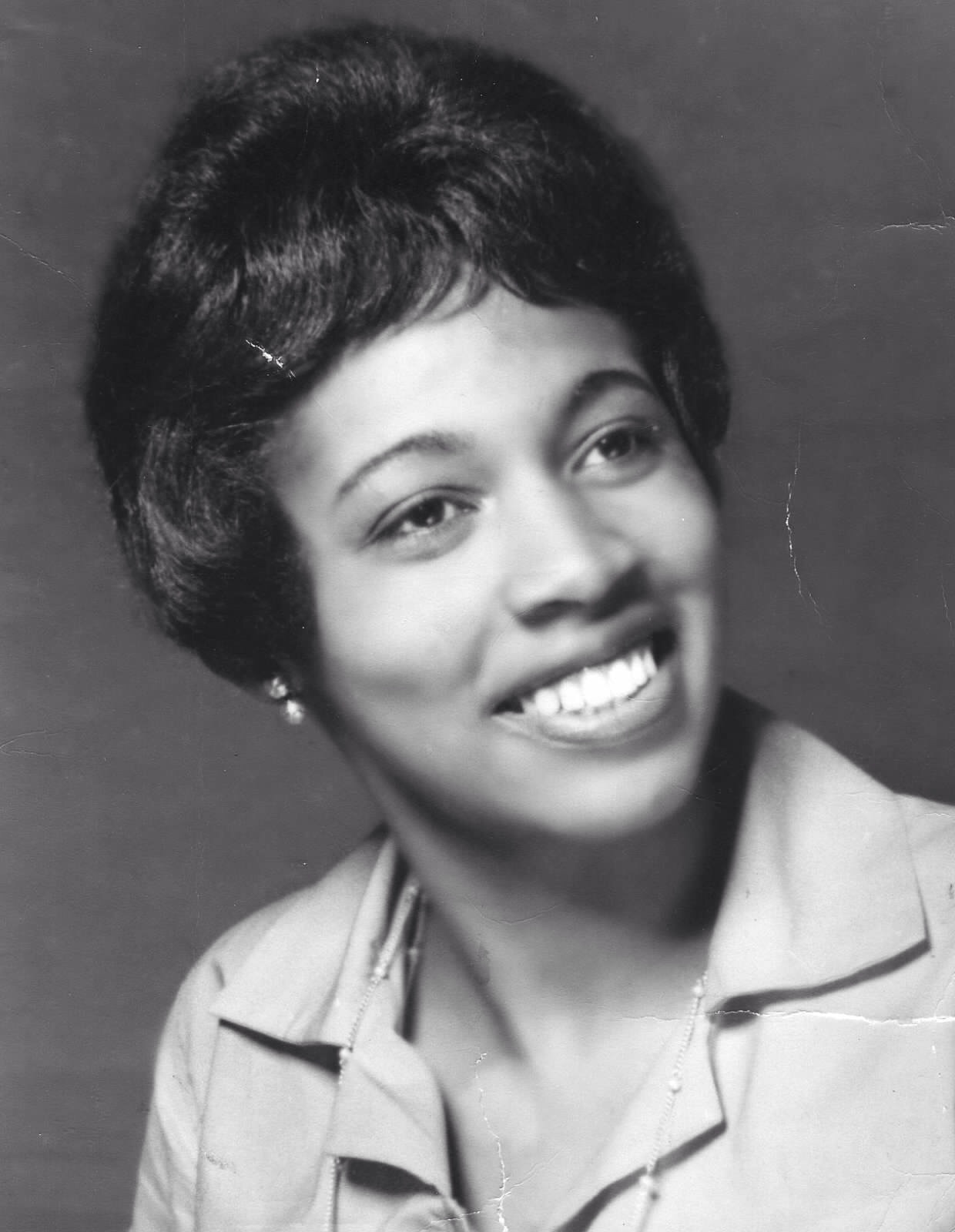
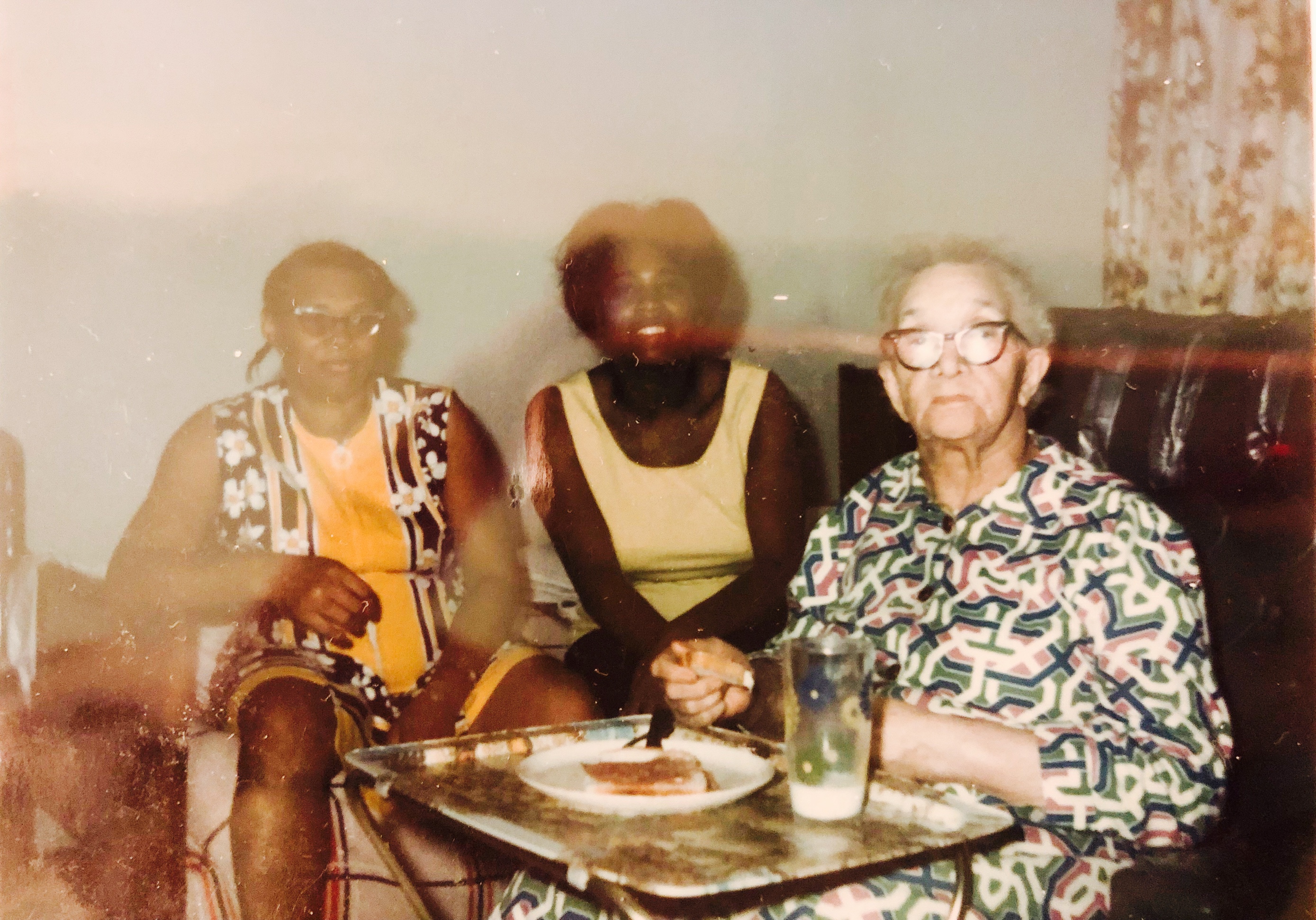
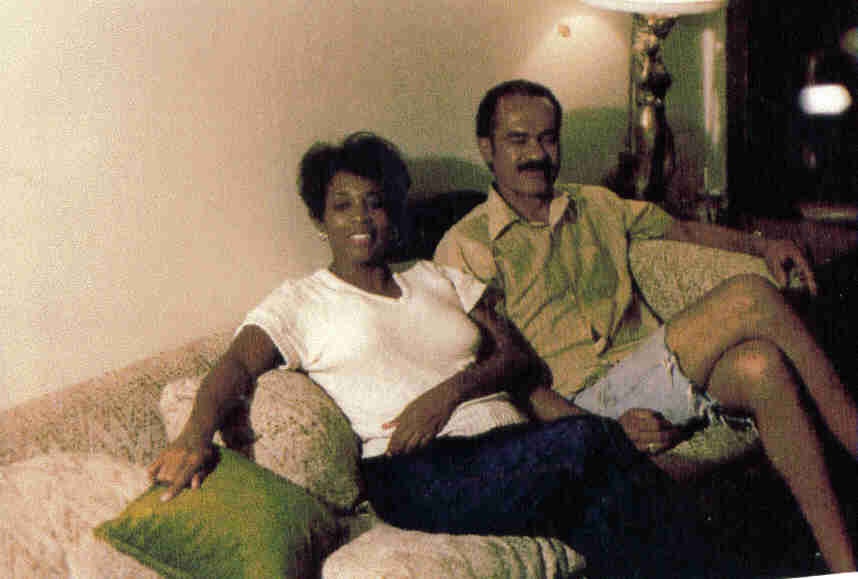
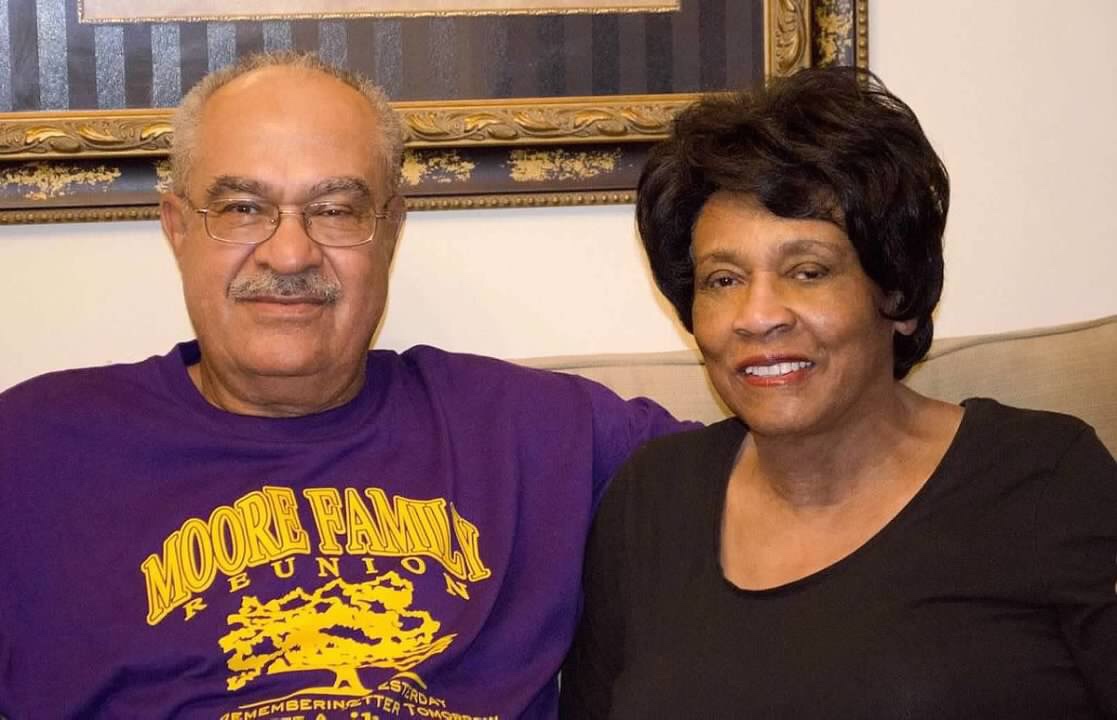
I’m writing this and smiling, because I’m thinking about a woman who makes my heart happy, and remembering all the things that made her so absolutely special to me. On this August 14th, a week after my birthday, I am thinking of my Aunt Ruby Gene and how the world was introduced to her on this particular day! As much as I am typically inclined to think about how much I miss her and other loved ones I have loved and lost, for some reason, I have settled more on enjoying fond memories of her time here, and celebrating that she was and not focusing that she no longer is.
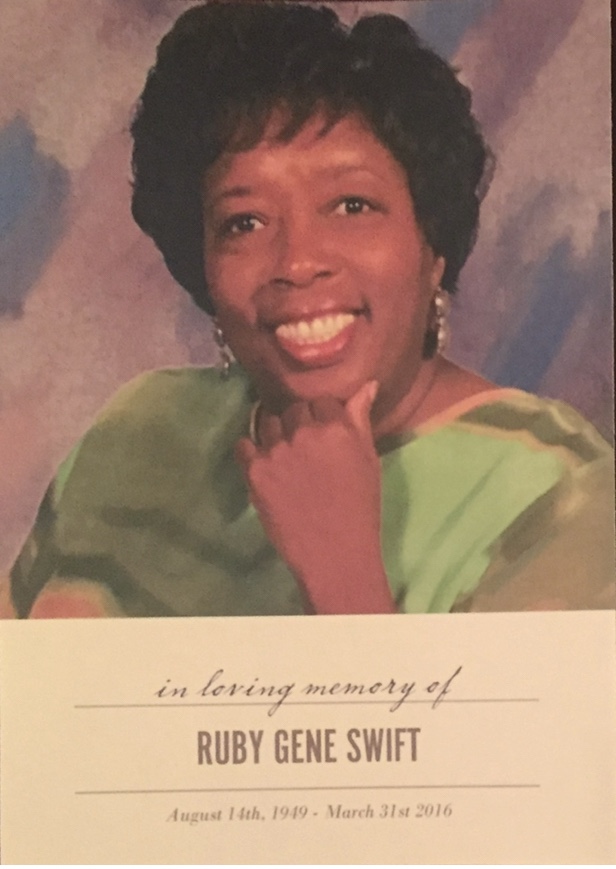
Why was she my favorite aunt, you may ask? In one word…spirit. Aunt Ruby (I like to add the Gene because it is so close to my own name, and even fancy that I was named Gina because of her influence; I have been known to dismiss any suggestions otherwise, but I digress) had an amazing spirit which spoke to me. When I try to think of the best word to describe her personality and all she was, the best one I can think of is ebullient. She was everything the word means, and if you look up the meaning, she was precisely “cheerful and full of energy; boiling”. I often think I was drawn to her because we were both Leos and shared similar character traits and energy, given that we were born under the same sun sign, only a week apart. Who really knows? Either way, that spirit is what made me super-excited whenever we would visit my mom’s family in Chicago and she came over to visit with us.

Earlier this year, I wrote about my mother and experiences growing up with her and mentioned how much fun she was around her family of origin. Well, Aunt Ruby Gene was the embodiment of my mom’s family in many ways. My maternal grandfather remarried years after becoming a widow (I’ve also written about this), and Aunt Ruby was the “theirs” of the ‘his, hers, and theirs’ that was my mom’s blended family with her father, stepmother, siblings, and step-siblings. She was also the aunt who was single without kids, and was likely a bit more footloose and fancy-free for that reason. This is perhaps a big part of why I always thought of her as the fun aunt…I never witnessed her transitioning into disciplinary mode, screaming at children or giving them “the look” that no child ever wants to get from any black Mama when they’ve been acting up, because it means, let’s say…foreshadowing. 😆

Aunt Ruby created so many memories just by the way she lived that I will forever have these emblazoned lovingly in my mind and in my heart. She was the aunt who would suggest that we go shopping at nearly midnight at the giant discount grocery store on the South Side when we were simply visiting Chicago and clearly had no need to go shopping; but that is what we did. Her love of food and concurrent struggle with weight along with her habit of getting into various health and weight-loss fads and products made her a woman after my heart when I came into my thicker phase of life as a late teen/early young adult. She understood my struggles and could relate to wanting to eat good food but also not be 600 pounds.
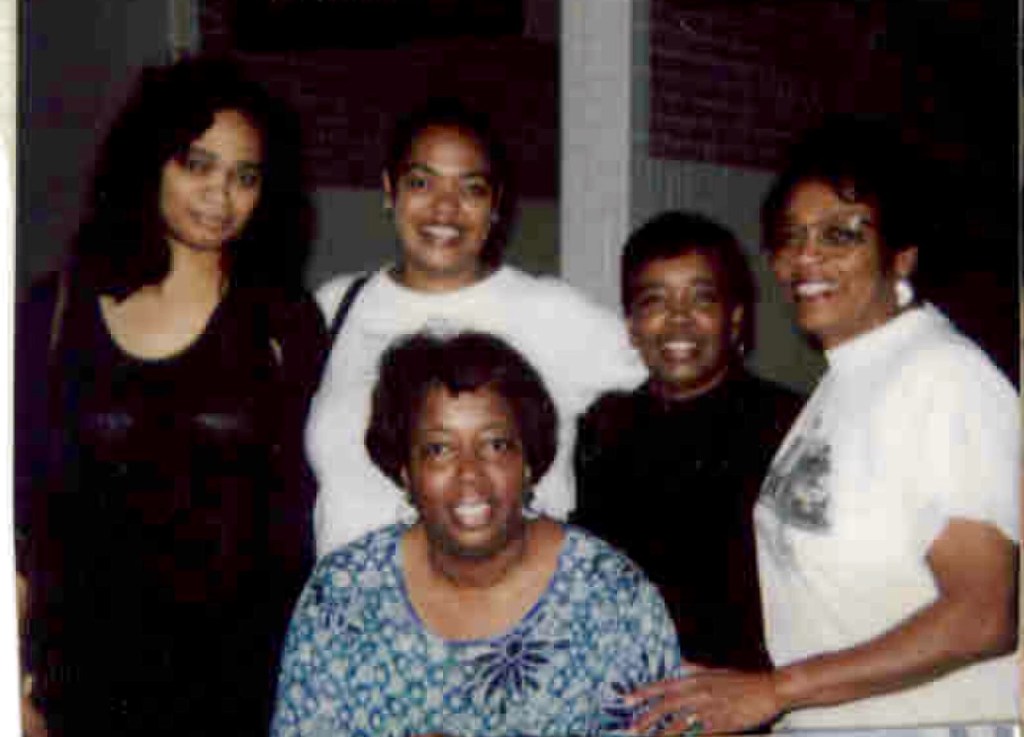
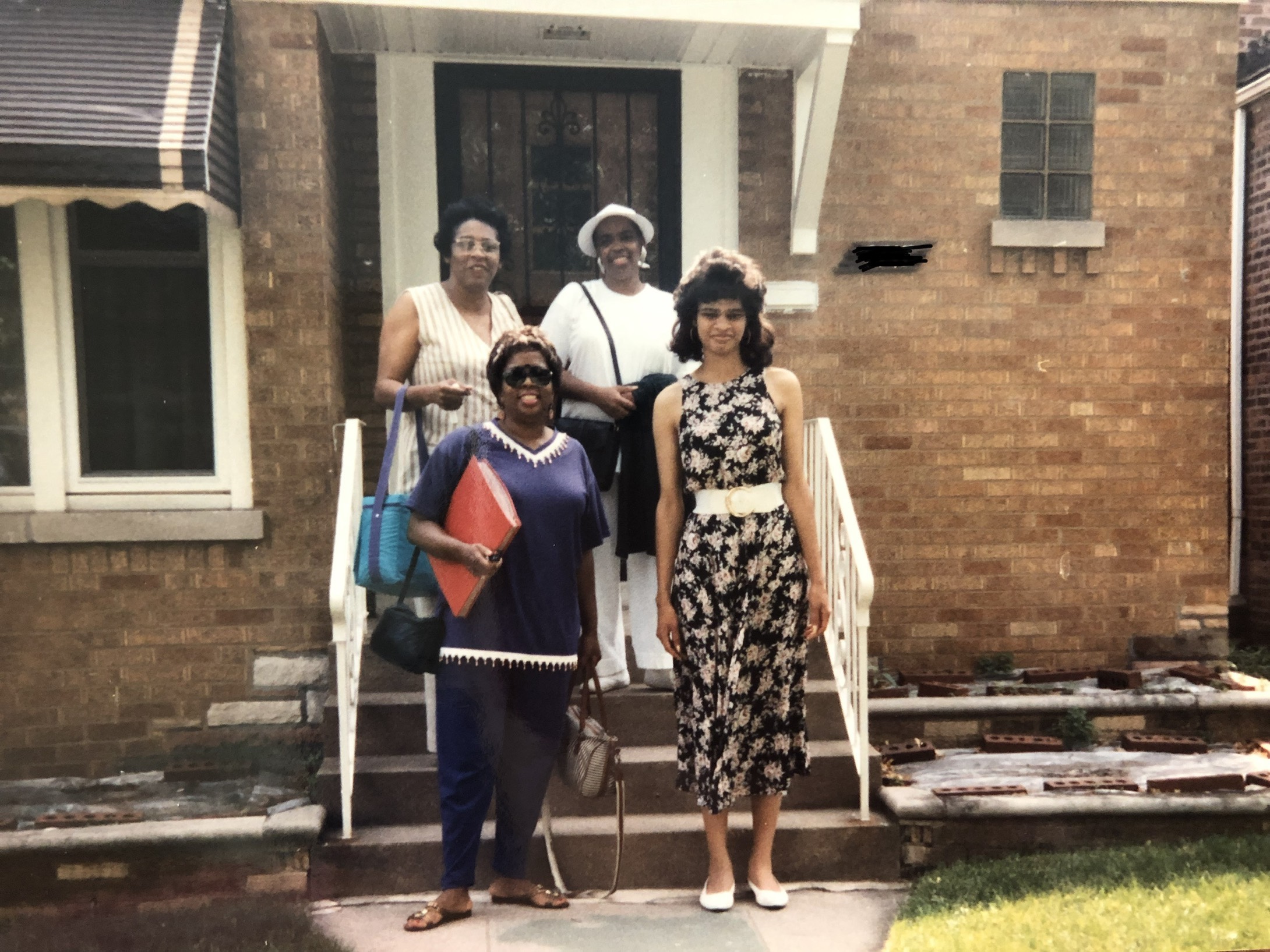
Aunt Ruby Gene in the lower center, from L to R, my sister Ingrid; me; Aunt Marie; my mother, Margaret

She was the youngest of both families as the product of the family blend, and she had the spirit of the youngest, to which I could also relate. In a word, she was the STAR of the family, and well…🤷🏽‍♀️ If you needed someone to kick off dancing, modeling, or singing the best of Luther, Aunt Ruby was your person! She could get her older siblings riled up and ready to party, and inspire excitement and revelry for everyone at our family gatherings.
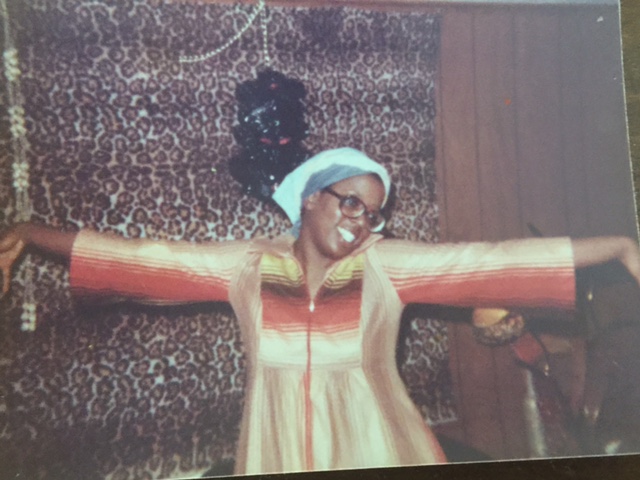
The Star in her element!

One of the things that I admired most about Aunt Ruby, and one I hope to emulate as I continue to age and mature is her comedy. She was simply HILARIOUS. While driving in stressful Chicago traffic, she was the aunt who would scream at the person honking nearby, “well your horn works, now try your lights!” And she was known for pulling aside and letting speed-racers drive by and yelling “YOU GOT IT! YOU WON!” When a cousin was hardly old enough to talk yet, he somehow learned the phrase “Puck you” and at one point was reciting it repeatedly as preschool children are want to do with phrases that get a rise out of adults; this one certainly did, with everyone imploring for him to stop, because it was…not a good look for us or for him- lol. One day, he decided to yell “Puck you” repeatedly at Aunt Ruby and well, it just wasn’t the day and she wasn’t the one, so she looked down at his adorable little 3-year-old face and yelled “Well, PUCK YOU TOO!” This was a quintessential Aunt Ruby Gene moment of hilarity for me.

Though she was fun and could be the life of the party any day, Aunt Ruby was also accomplished and inspirational. These are the aspects of her character that she didn’t flaunt or necessarily advertise, but if you spent any reasonable time in conversation with her, you would see that she was brilliant, ambitious, and hard-working to boot. She valued education and earned her Master’s degree, and always encouraged me to pursue my career goals. She would work for the post office, teach, and even own her own daycare center in the course of her lifetime. I was inspired by how she talked about her dreams and desires for her life, and what inspired her. She was close to my Aunt Marie, living with her at various periods of her life, and at the time of her actual sunset several years ago. Together, they would give raving endorsements of different products and programs that inspired them to live their best lives OUT LOUD. I would put their testimonials up against any VIP marketing executives today for what I recall of their discussions on Shaklee, Les Brown, ‘The Secret’, The Bible, and even Jesus himself. Her faith and spirituality was second to none. I find myself now reflecting on some of the things she said she did for her peace and happiness, and realize that I’ve had such a beautiful role model in her. I remember laughing at how “extra” she was when she said she once went on a trip and cast stones representing things that had weighed her down into the Gulf of Mexico and let them be free. In retrospect, that is probably some of the best guidance I have ever received on letting go of the past and moving forward in peace, love, and happiness.

So what is it that Aunt Ruby did and what was it about her that earned my unfettered appreciation? The answer still remains that she was simply a character – almost a kindred spirit of sorts. And I believe she sensed in me a kindred spirit in return. Over the years of my young adult life as I transitioned from college to med school to early career, she would send me letters or cards, mostly on my birthday. She gave me one of the Bibles I own, and since I’m a pack rat, I have kept everything she ever sent me. Sometimes, she would send me inspirational sayings and simple words of encouragement for life. I treasure each and everything she ever sent me – they are priceless. One of the things she sent me (along with large fake $1000 bills, which was SO her kind of thing – to be aspirational beyond our wildest dreams) was the portion of Nelson Mandela’s inauguration speech that was a quote by Marianne Williamson (see below). This alone is a significant representation of what Aunt Ruby always tried to express to me about letting my light shine.

Aunt Ruby Gene sent me this and I have had it hanging in every home in which I’ve lived since, across multiple states and homes.

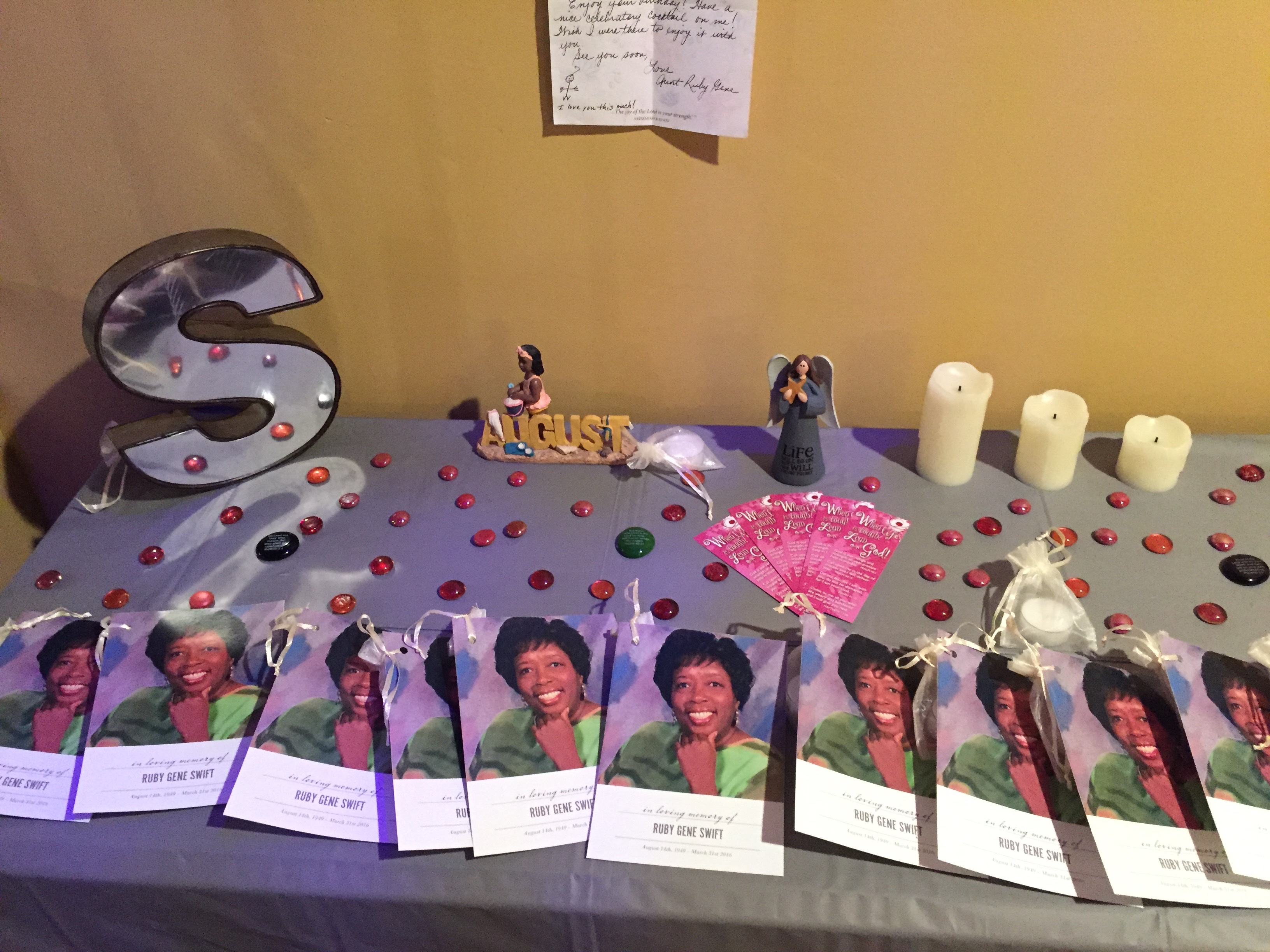
When Aunt Ruby became gravely ill a few years ago, I was grateful that we got the chance to go and spend a little bit of time with her in Chicago before she transitioned. She was thin and frail, but nevertheless, still hilarious and spirited. And I even got to text message with her, which was a special treat, and I obviously saved those messages. Once she passed away, she was brought back down South for her final resting place and our family graciously allowed me to host a repast for her. I have been told by many people that it is very strange to have done so, but I could care less, because what else would you do for a kindred spirit with whom so much love and positive energy had always been exchanged? You keep exchanging it, even when one of you is on the other side of this earthly orb. We got to release balloons as a family, symbolizing the well-wishes we sent to her spirit as it made its way to places unknown to those of us left behind. I hope and actually believe she enjoyed it ☺️💕.
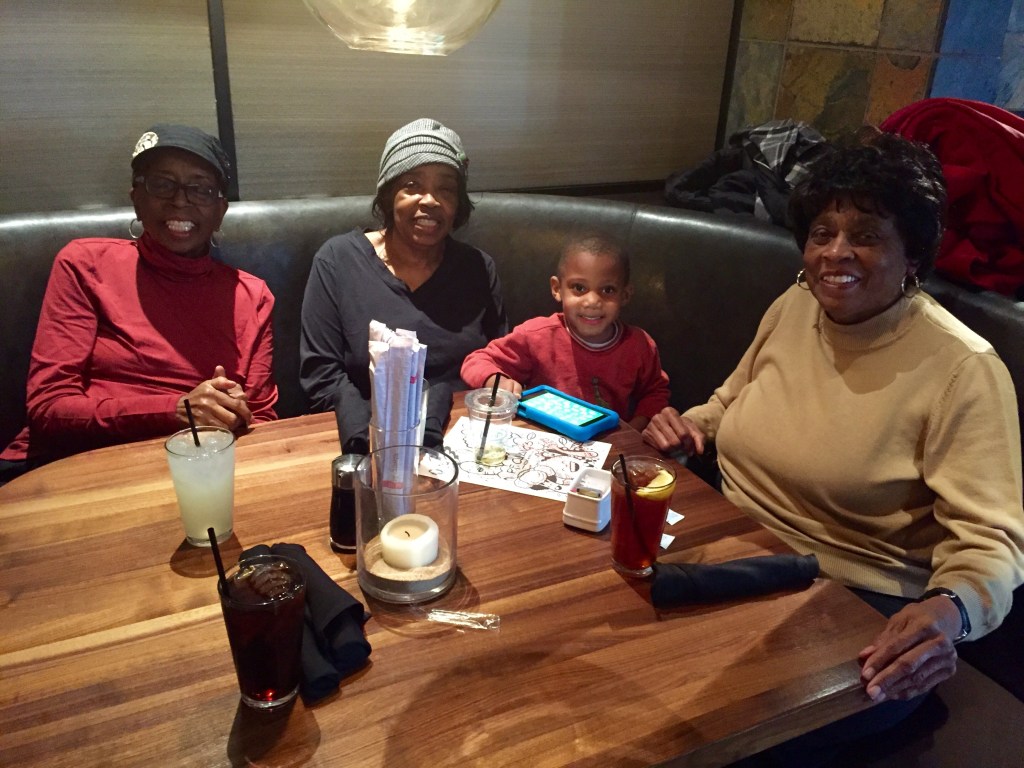
Our last visit with Aunt Ruby Gene in Chicago; from L to R: Aunt Ruby Gene, Aunt Marie, my son Dominic, my mother Margaret
Tribute/Repast to Aunt Ruby
Balloons released for Aunt Ruby

So today, on August 14th, I am celebrating my Aunt Ruby, my fun and favorite aunt. Though she is not here in physical form anymore, she lives on in spirit, in my heart, and in my mind; and I can still feel her telling me to let my light shine. Happy Birthday, Aunt Ruby Gene! 💗
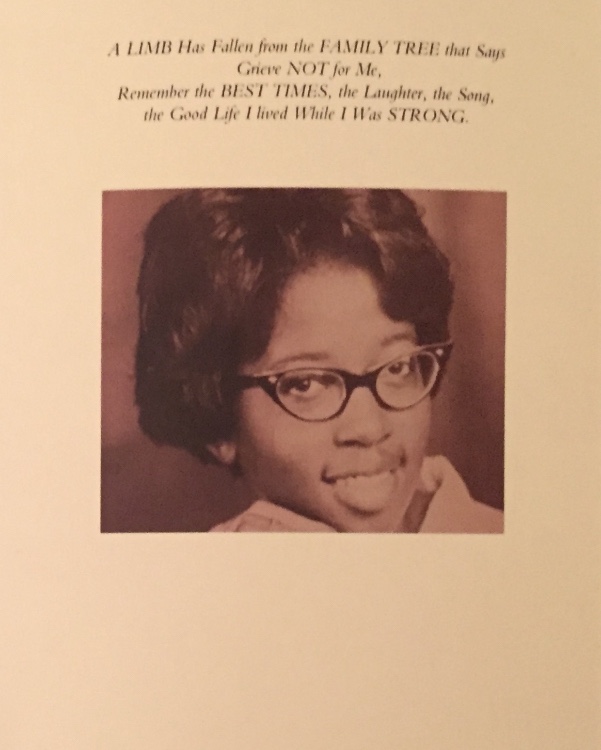
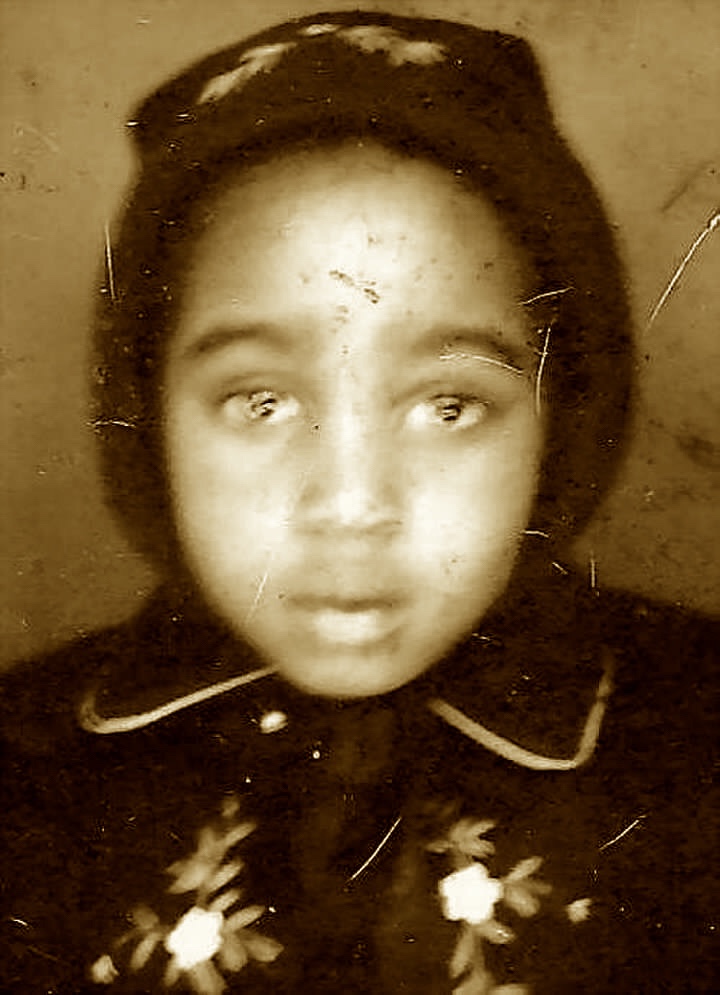
For my first, finest, and favorite teacher- Mama (a.k.a. Margaret/Marge)- on her New Year’s Birthday

“This crying stuff…that must come from your Daddy’s side of the family, because you don’t get that from me or mine. You’re gonna just have to get past this, dust yourself off, get up, and keep on going.” These words are ones which I have heard all too often in some iteration from my mother, Margaret. I can’t think of any expression to better demonstrate her “pick yourself up by your bootstraps” belief system.

Many people can categorize their mothers in one of two broad categories: they either describe her as super-sweet, domestic, nurturing to a fault, and maybe even a pushover, or they describe her as strict, career-focused, abrasive, and possibly aloof. I don’t think any of these terms would accurately describe the woman who has graced this earth (dare I say?) long enough to claim Octogenarian status. I can confidently say that my mother is tough, nurturing, petty (when it’s in order), intelligent, highly creative, quick-witted, determined, somewhat stubborn, loving, kind-hearted, feminine, quicker-to-anger than she will ever admit, pretty, astute, regal, articulate, proud, generous, thoughtful, dynamic, and gregarious.

Mama did not come by these characteristics easily, and she has earned every single one during her years. Her humble beginnings were mired in the fact that her mother died just 4 days after she turned 7 years old (on New Year’s Day), leaving my mother as the oldest of 3, with a father who already struggled to make ends meet as a laborer.

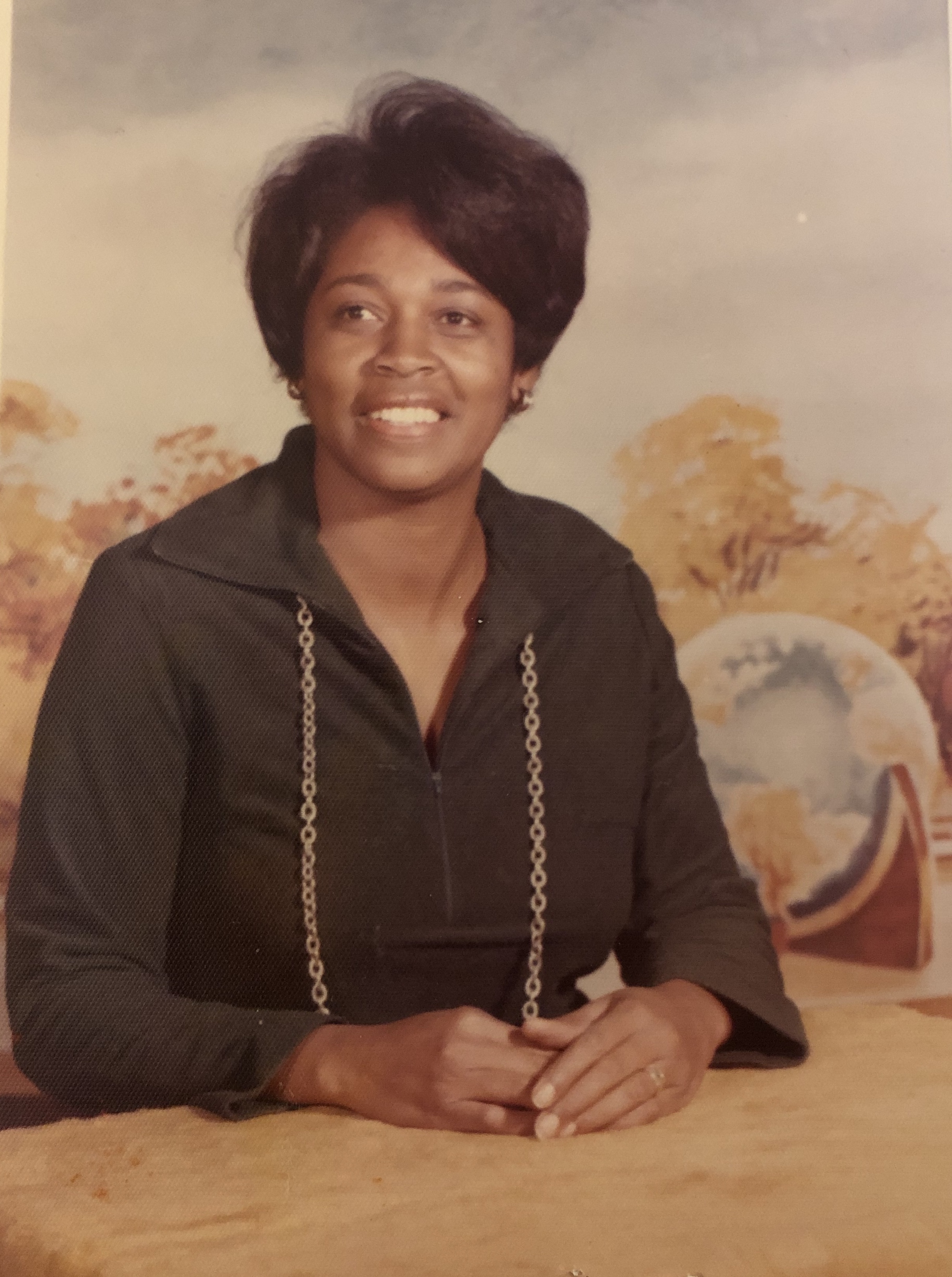
My Mother, During Childhood

Her early years would be spent moving from Memphis to New Jersey to live with her maternal grandmother, leaving by train for the unknown just days after laying her mother to eternal rest. While there, her beloved Aunt Hattie and her young Uncle Booker worked multiple jobs to help take care of their deceased sister’s children along with their mother; Mama would be forever grateful to this favorite Uncle Booker, and pass this love and adoration for him down to her own children.

Back Row: Cousin Sherman, Mama’s Father (Odell Sr), Uncle Booker, Mama, & Me (on her lap); Front Row: Cousin Tyrone (Uncle Booker’s Son), and my sister, Ingrid

Unfortunately, because of the times, resources, and ages of different relatives, Mama and her siblings would move to several different cities to live with several different family members over their formative years. Over time, Mama became familiar with parts of New Jersey, Philadelphia, Gary, Indiana, and Forrest City, Arkansas before she and my Uncle Odell moved back to Memphis when their father remarried. They would become separated from my Aunt Marie, who would end up staying with a relative who chose to raise her in Gary permanently. Back in Memphis, my mother and her brother became part of a blended family, with a “his”, “hers”, and “theirs” of children with their father and stepmother. I would be remiss if I spoke on my mother’s upbringing and didn’t mention that she will always love her family’s school, Manassas High, and she’ll forever be proud to be an HBCU grad of Lemoyne (now Lemoyne-Owen)!

Mama, in younger years

Because my mother lost her mother so early, we will never know if she gets her “personality plus” attributes from her mother, father, or both. My Granddaddy Odell cannot possibly be contained within the context of a post about my mother, so I will post about him for his birthday this upcoming February. What I can say is that we did have the good fortune to know Mama’s aunts from both sides of her family, and because she shares many of their character traits, it’s no wonder that she has never been accused of being boring! Between Aunt Clara, who could talk longer than the day is long; Aunt Ruthie, who stayed spry long beyond her elderly years; and Aunt Naomi, who had men vying to be her next husband up until her last elderly days, she didn’t lack strong female idols. She was also strongly influenced by her grandmothers and even more bold women who were progressive before their time. These women taught her how to be independent, how to stand on her own two feet, and how to manage money responsibly, in the context of both being single and as a married woman.

Mama’s maternal Aunt Naomi, Mama, and her maternal Grandmother Helen

Mama was typically excited and a lively contrast to my more subdued father, who was the country to her city mouse. I love to hear Mama talk about the major adjustment it was for her, a bona fide North Memphis girl, to move miles across the county to start a new life with my father on this quiet and remote farm, his birthplace, where animals made strange noises in the dark cloak of night! But she did just that, and naturally charmed the daylights out of her mother-in-law and father-in-law, who lived down the street on that same farm, in the process. On that farm, she would grow comfortable, raise a family, and eventually say goodbye to and bury the husband who took her from the city to be there with him in the first place.

Mama and Daddy

Mama and Daddy, After 40+ years of marriage

Prior to meeting my father and after graduating from college, Mama began her life’s calling as a teacher. (Years later, she would earn a Master’s degree remotely with distance learning…LONG before it was vogue, and while working full-time, married, and raising children.) Her father was so very proud to tell everyone that his daughter was a teacher! He made it a point to always tell her that nothing was more important than getting her education; this was undoubtedly very valuable to him, as he had never had the opportunity for significant education himself. In the beginning of her career, she taught a couple of different grades, but she quickly found that her heart would always belong to 1st graders. Over 20 years after retiring, she still lights up when she hears of a child who is 6 years old, because these little kindergarten transitioners are her people; she has said they are “sponges” who are at the ready to “soak up” knowledge. The one slight downside to having a mother who has been passionate about teaching, though, is that she never turns the ‘Educator’ mode off. She will deny it, but I’m pretty sure she was correcting our diction when my sister and I were each still in kindergarten; our father was not helpful in this regard, serving as a background grammar police cheerleader, advising us not to always start sentences with “but” and “like” 😐. Nevertheless, to this day, I have heard few people regale others with the joy their profession brings them as Mama does when she describes how it feels to watch a child’s “lightbulb come on” when teaching them a concept that they finally grasp. Everyone should be so fortunate to love what they spend most of their lives doing while serving others in a profession.

Margaret, back in her teaching heyday

My earliest memory of Mama, as my sister Ingrid and I affectionately call her, was of a time when I was in a walker (my pediatrician-heart aches a bit over this – lol). It’s actually my very first memory, and I recall that it was when she welcomed my paternal great-uncle, Uncle Edward, into the house at the kitchen door, and they were both so…LOUD! He was a very lively personality, was likely hard of hearing at the time, and the two of them together would have naturally been very…spirited, so it’s no wonder that the mere startle of their jovial greeting has remained as my first vividly clear memory.

Mama and Me

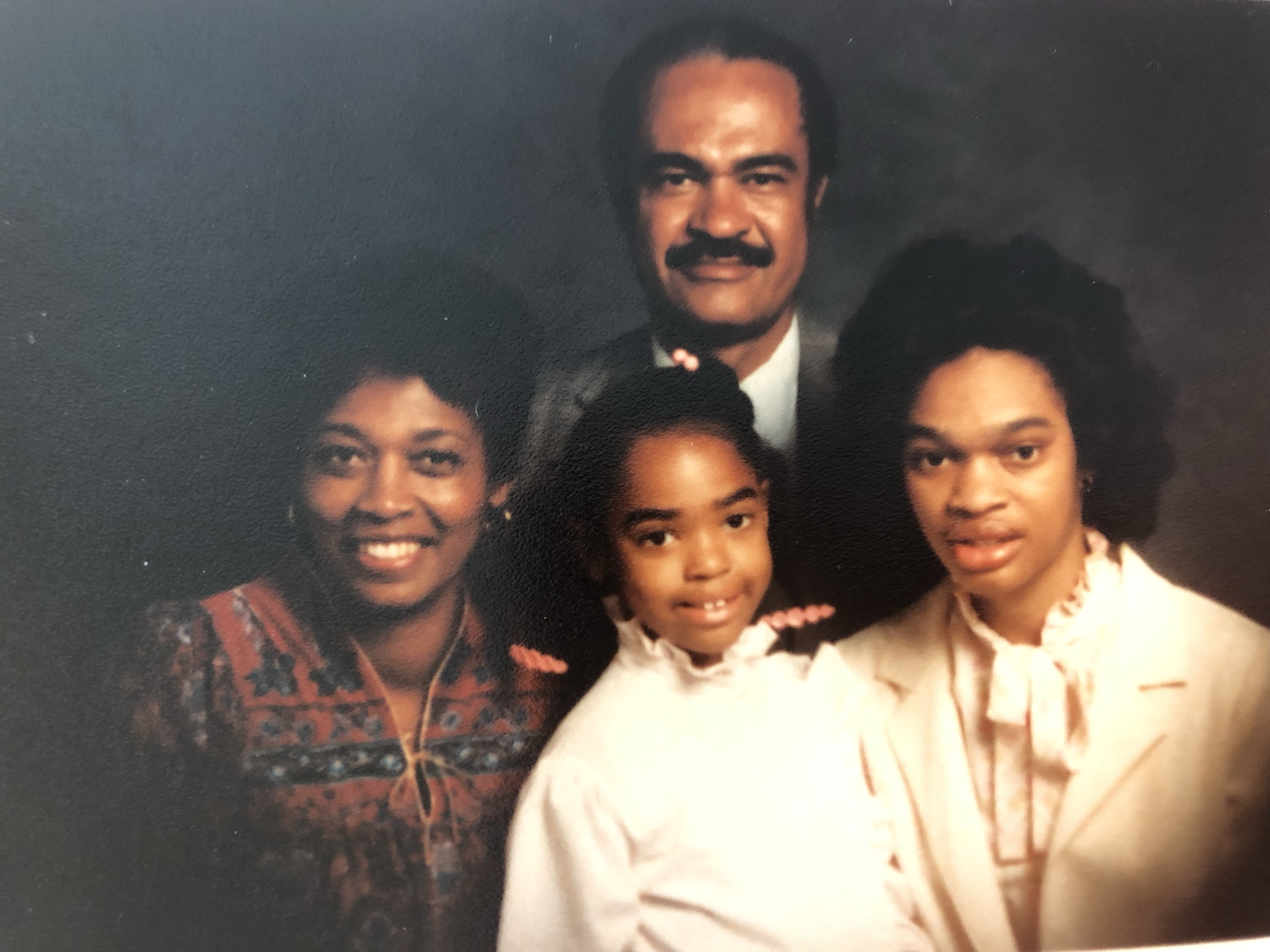
An 80s-era family pic

However, as dynamic as she has been on her own accord, there has never been and never will be more flourish in movements, pep in her step, or brightness in Mama’s beautiful smile than when she was around her siblings during her middle-aged years of the 1980s. Some of my fondest childhood memories are from summers visiting my aunts on the South Side of Chicago, watching as Mama and Aunt Marie pushed each other aside, arms akimbo, proudly shoving their bosom forward and proclaiming that they had bigger busts than their sister. This was a real thing-LOL! Only when we were in Chicago would we find another person who HAD to be Mama’s sister, because the only other person we had ever met who would, like our mother, routinely start singing what would be normal conversation for anyone else was our Aunt Marie. Better yet, nothing compared to late night shopping sprees at Cub Foods with Aunt Ruby (why were we buying food when we didn’t live there?) and watching all the Swift siblings sing and dance to Barry White, Teddy Pendergrass, and the best of Motown.

One of our many visits to the South Side to spend time with my mom and her sisters

Back Row: Mama and Aunt Marie; Front Row: Aunt Ruby and my sister, Ingrid

My Uncle Odell (Jr) actually had a video recorder back in the day, so there are videos of get-togethers showcasing their father and other family in impromptu family fashion shows. One sound that I hope to never forget in this lifetime is that of the thundering, ebullient laughter of Mama, Granddaddy Odell, her siblings, and our entire Swift crew as they enjoyed the few, precious times they got to spend quality time together.

Mama, Uncle Odell, and Aunt Marie circa 1980s

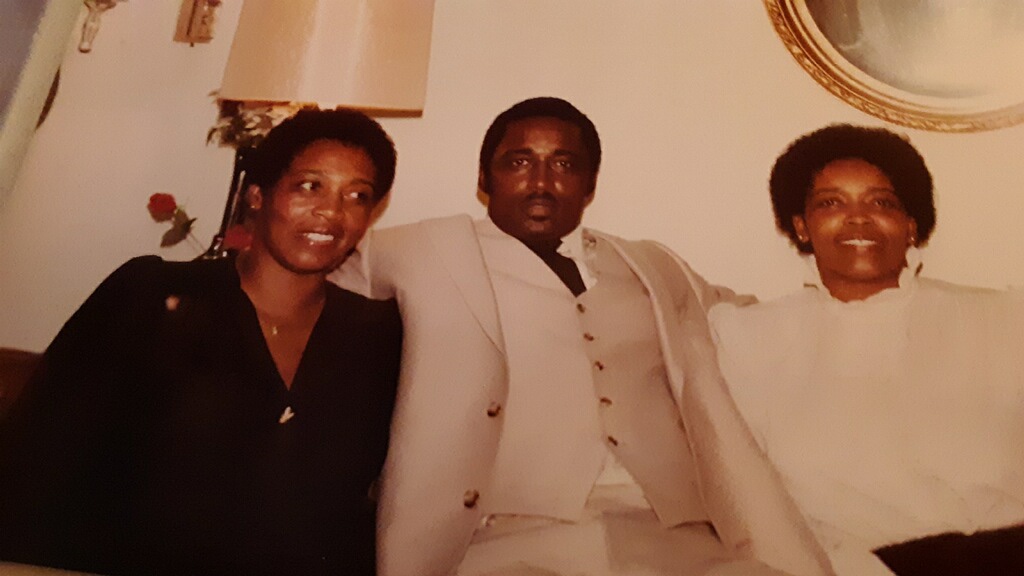
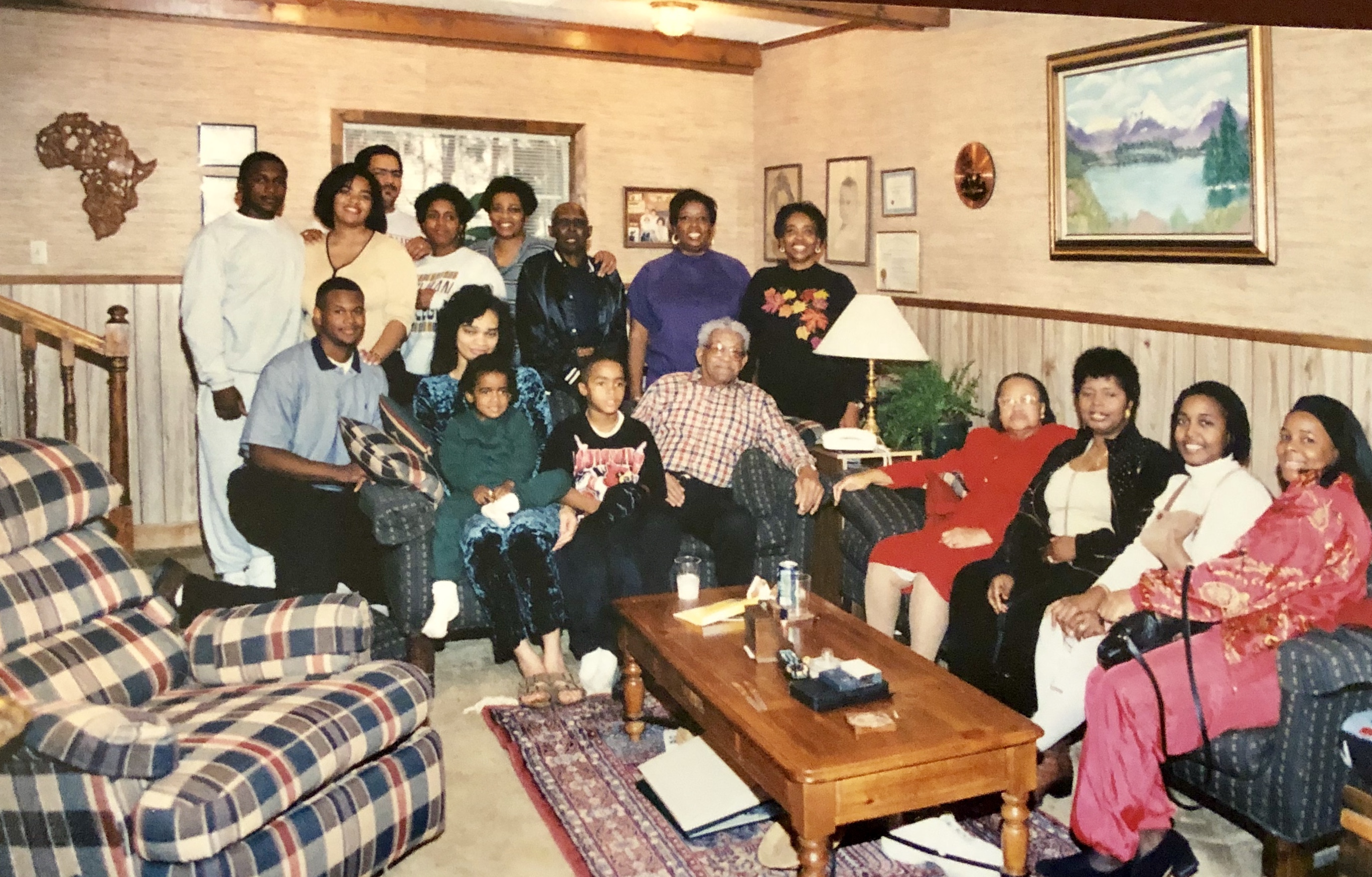
At home with Mama, her siblings, uncles, aunt, and multiple Swift Family members

Though my mom can cut a rug with her siblings, she has found many ways to make life as interesting as possible for her own little family, as well. Thanks to her, my childhood was replete with Saturdays for hustling and bustling from ballet to piano/organ lessons to Sears shopping excursions. With a mother who was the quintessential first-grade teacher who had to have the best items for her students, I knew what it was like to go shopping with the actual teacher in those classroom supply stores! She was the one who would create the most creative treats for our Girl Scout troops when it was her turn to provide refreshments, long before Pinterest was even a consideration. If you are going to roast someone or need a person to create a last-minute speech to give at someone’s retirement event (as in, on a napkin while actually attending said dinner celebration), Margaret is the one to ask! When I was growing up, she was known for giving out large peppermint candy sticks to my kid cousins for Christmas, and also for coordinating the cousins’ annual summer trips to the celebrated Memphis Zoo. She sang ever-so-melodiously in our church choir before she eventually would have severe arthritis leading to spinal cord injury and permanent impairment of driving and prolonged standing abilities. I wish I had half the voice and singing talent she has; American Idol’s Susan Boyle has nothing on her rendition of ‘How Great Thou Art’.

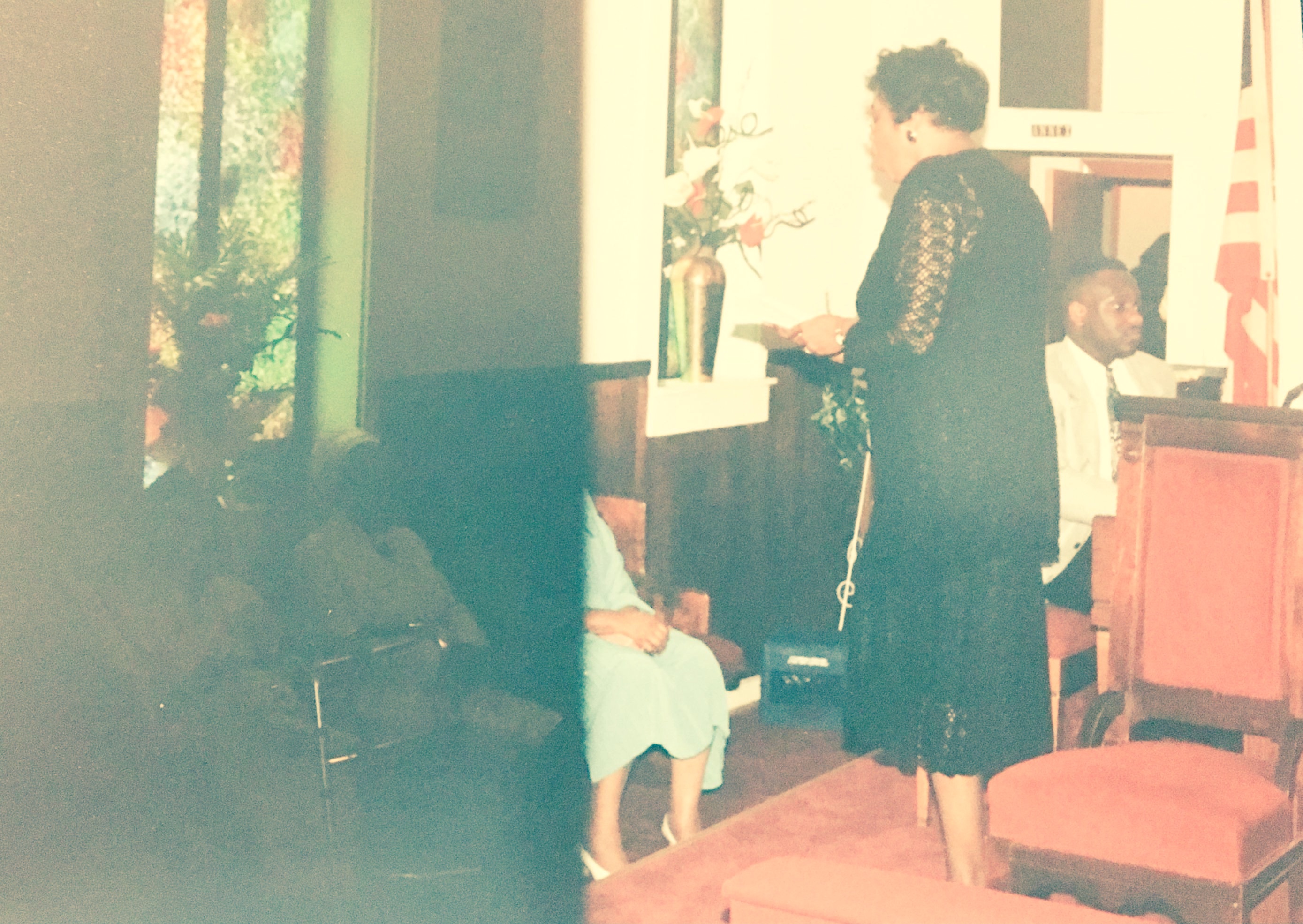
Mama, presenting and/or preparing to sing something to the Mother’s Board in church

When we went to DisneyWorld for the first time and I was afraid to get on the roller coaster, she did an on-the-spot commercial about how much fun it was going to be!

Riding an amusement park ride with Mama

I could go on and on, but it’s probably clear that my mother has always possessed a zest for enjoying the fun aspects of life and embracing those, instead of dwelling in times of sadness and defeat.

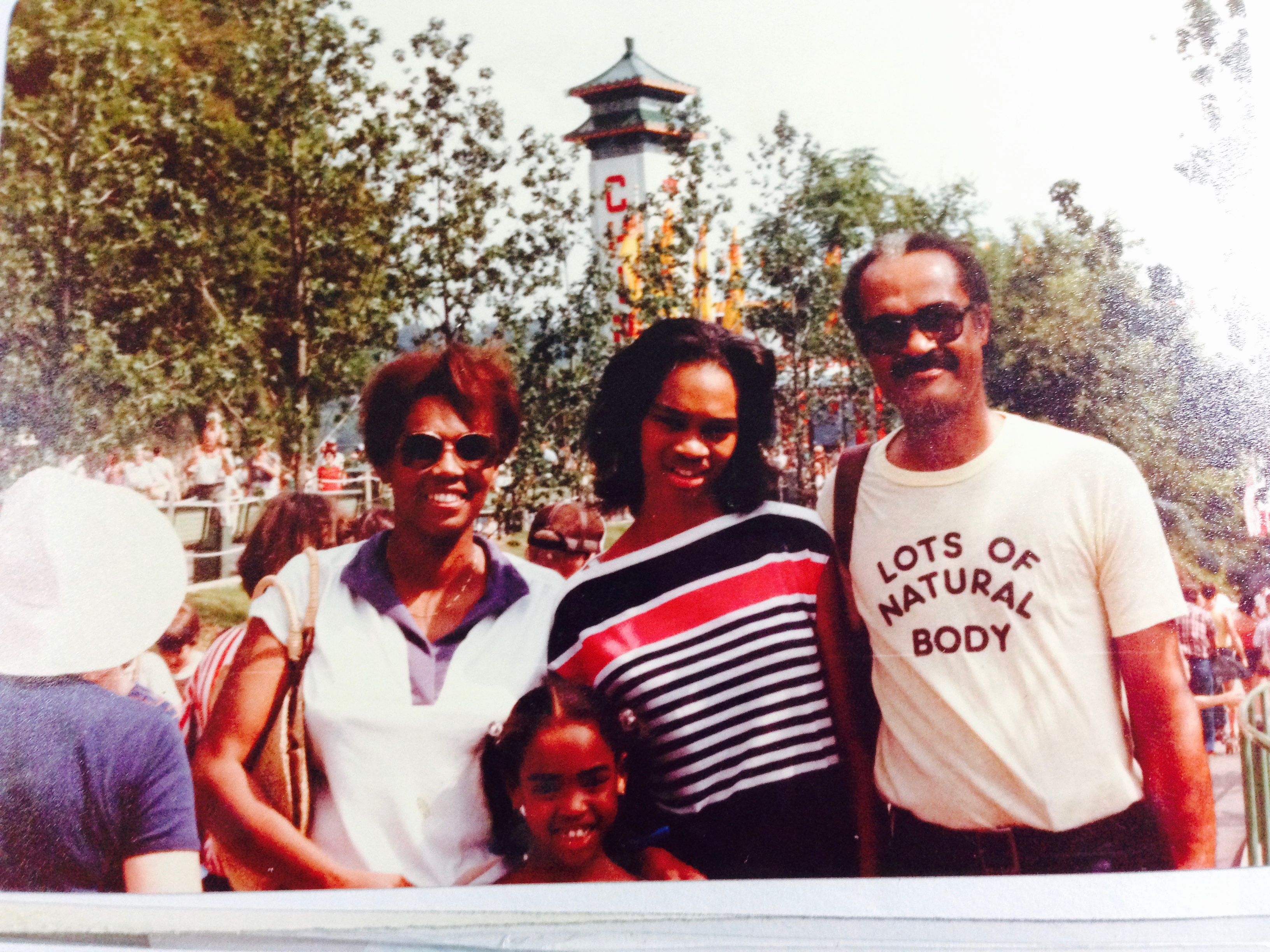
A Favorite Pic of our Family at the World’s Fair in Knoxville

I fully believe that this is born of having to persevere in the face of losing her mother at an early age, having a strict father who didn’t take any crap (he would use another word 🙂 ), and being guided by strong women who didn’t espouse a ‘woe is me’ weakness-riddled agenda or feeble feminine mindset that screamed of wanting to be saved. Mama has had the spirit to prevail, despite the adversity of being born into poverty, the tragic childhood death of her mom, and the trials and tribulations of life as a black woman in the South enduring Jim Crow, the Civil Rights Movement, and beyond into the 21st century. Even when I’m happy to take a break from being strong and triumphing over hardships, I’m grateful that one of her best gifts to me is the legacy of grit and determination that she received from previous generations of our family.

Perhaps one of the greatest delights of my adult life has been watching my mother enjoy being a grandmother. She is aware that she feels my son can do no wrong, and that he has her wrapped around his finger. The funniest thing is that she LOVED raising girls; she said she relished in dressing us up like “living dolls”, and this made me dream of the day when I would have my own little real-girl doll to dress up!

Mama and her Grown Girl Dolls 🙂

However, neither of us could have fathomed the pure joy of a boy, and the fun that only a child who is willing to risk limb and life to run, jump, and vault over random objects could bring. Mama is a natural at being a doting “Mom Mom”, as she has chosen to be called. Ironically, though I can’t describe Mama using the words in the broad categories mentioned at the beginning of this post, I can do so when referring to her as a grandmother. Without a doubt, Mama as Mom Mom is super-sweet, domestic, nurturing to a fault, and yes, even a pushover; in 80-plus years, she has earned the right to be❤️.

Mom Mom and the Apple of her Eye

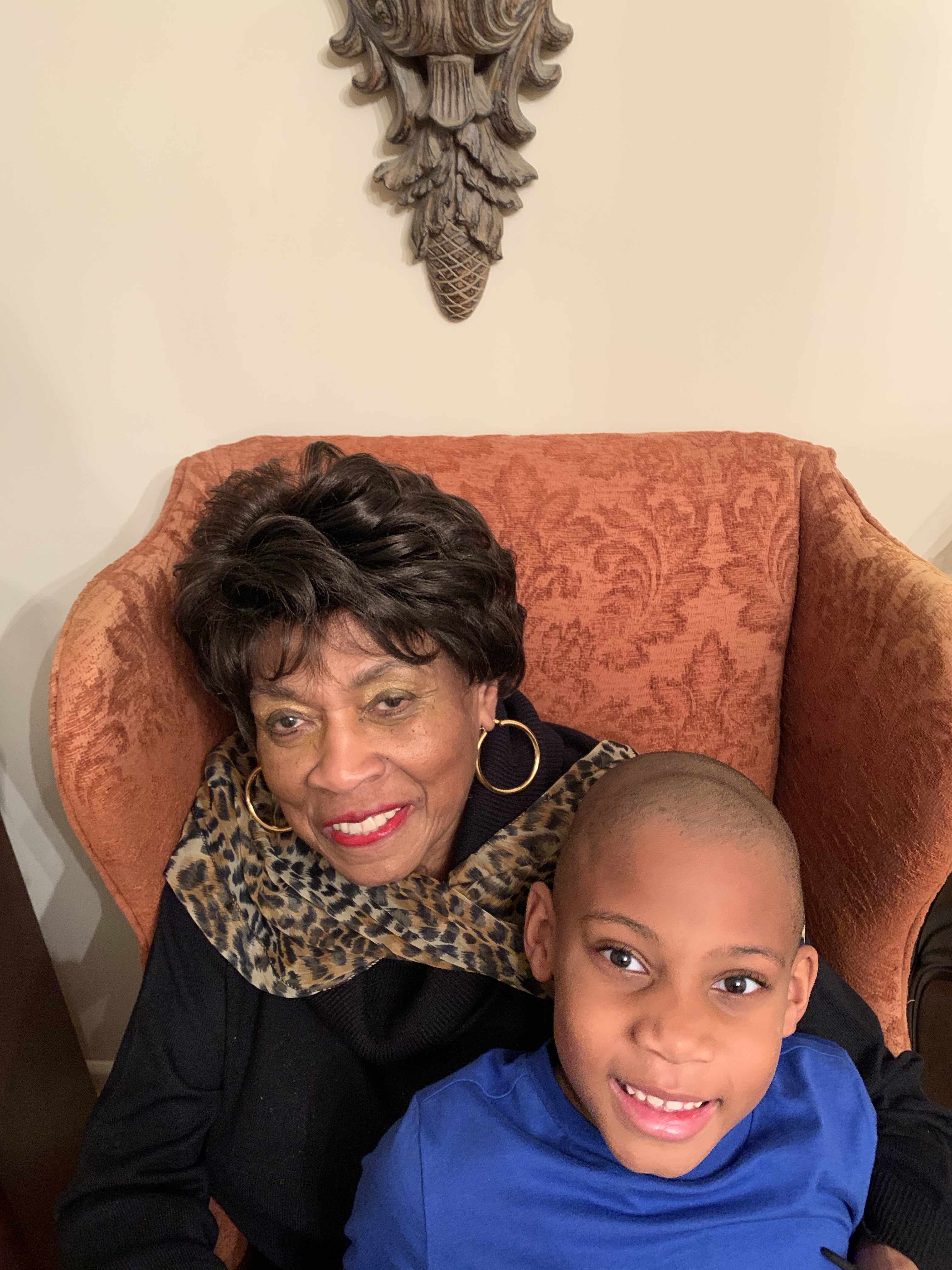
Mom Mom and Dominic, on her birthday, January 1st, 2020

Lightning Bugs and Being Country at ❤️

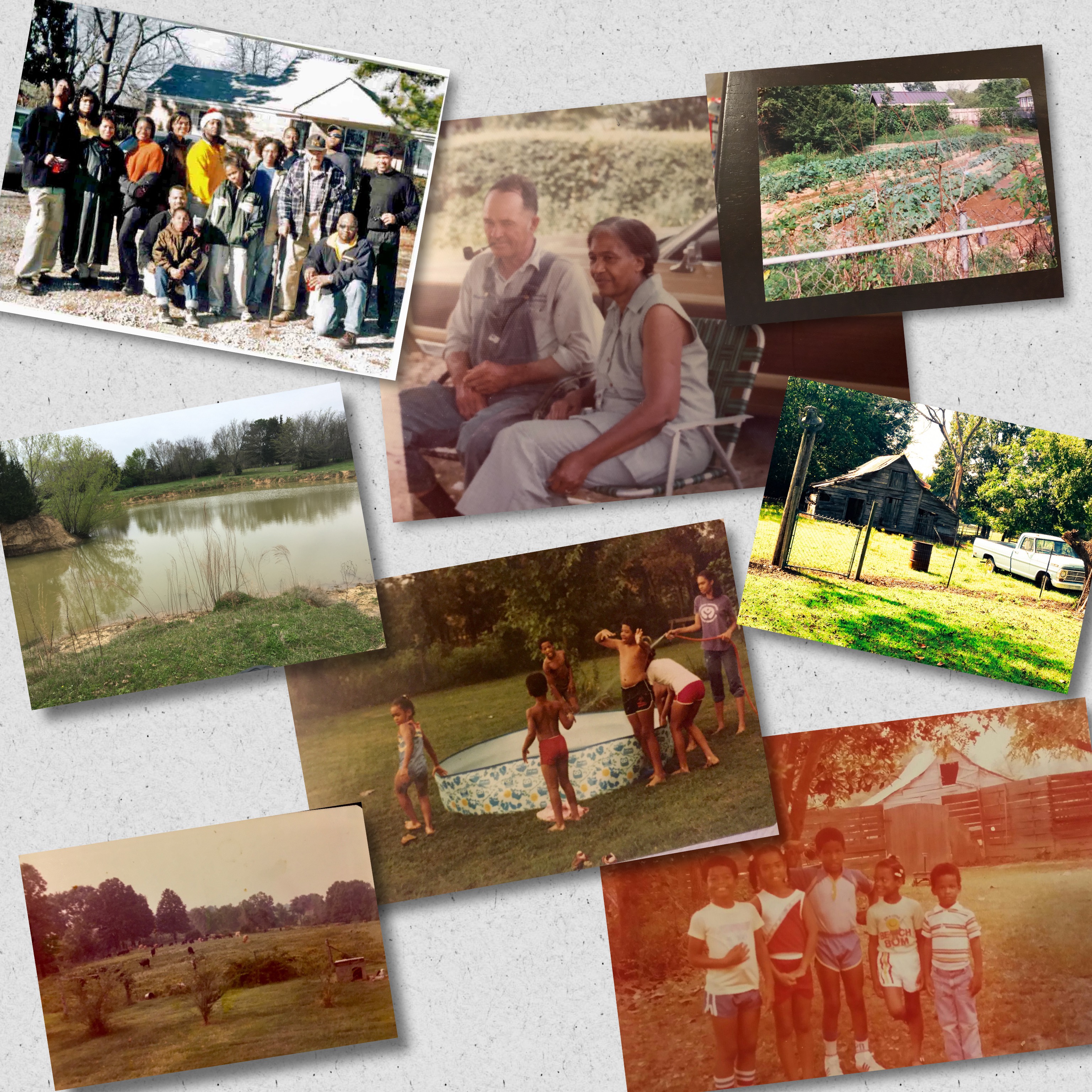
[Caption: Various pictures on the Moore Family Farm with Grandparents and their Grandchildren, etc.]

I suppose I’ve always liked writing to some extent, and now find it to be somewhat therapeutic to express myself through this particular art form.  I also happen to have a significant love for music and pictures, but more to come in an upcoming blog post on the importance of photographs soon.

Lately, those who I’ve loved and lost have been on my mind.  I figured it might be time to pull out a piece that I wrote when I had just finished my first year of college and had come home for a bit before taking off for some nerdly activity for the summer.  I wrote this piece, “Lightning Bugs”, after visiting with my paternal Grandfather, the subject of one of my previous blog posts; he remains one of my greatest influences.  As I read this 25 years after I wrote it, I laugh at how dramatic I am.  However, much of the sentiment is the same.  Unfortunately, the fate of those mentioned is not.  My Grandfather has since passed away.  And my cousin Kevin, born the same year as I, has been missed for almost 20 years.  In fact, this story was printed and placed in his funeral program, and I had planned to read it, but was not in an emotional state to do so. Instead, my father read it for me.  I remember that his voice broke when he read about my grandmother, his mother, being in Heaven.  And now, ironically, he is there with her.  So I am embedding this story within this post in tribute to all those mentioned who my family has loved and lost:

“Lightning Bugs”

by Gina M. Moore

written: Thursday, 5/12/94

         As I was leaving the other night, Grandfather commented on the lightning bugs dotting the dark black skies.  I looked on and smiled, slightly in recognition, slightly in awe.  Usually I would have said “goodbye” and carelessly driven away, but this night was so different.  I walked out to the car and before I sank in, I stopped.  Something about that night made me take a slow, deliberate gaze around the farmland surrounding me.

         Suddenly I could remember a time not too long ago. A time when my cousins and I could not wait for this season…Summer!  Climbing trees, picking mulberries, riding bicycles, catching lightning bugs.  It was a happy time; ironically, it brought such sadness now.  It aroused a heart-wrenching yearning, and I knew it was for nothing but yesteryear.

         I had known for a while that I’d always have those memories.  The memory of Kevin doing “dangerous stunts” on an old tree rope.  The many times Chris would ‘pop wheelies’ on his green BMX bike.  Tiffani jumping off of old, rickety benches.  The first time Vincent reached the top of the old Magnolia tree.  My scoring a home-run in our many kickball games.  And there were so many more.  The sweet taste of honeysuckle, longing to play with our older cousins, our grandmother’s fork-mashed peanut butter cookies, helping Grandfather plant corn.

         Something significant happened on that night.  For the first time in my life, the memories came flooding back and I acknowledged the fact that I can never go back to that time again.  I can reminisce and try to resurrect it, but that time is gone forever.  Though it was only a decade ago, it will never be again.

         Now, I’d be lucky to see all of my cousins together once in a year.  And if we were reunited, playing outside would not be on our priority list.  Climbing trees, swinging from ropes, and riding BMXs have been replaced by sports clubs and track practices for the state championship.  Our grandmother is baking cookies in Heaven and Grandfather doesn’t plant much of anything besides his bottom anymore.

         Though nostalgia does bring joy, it brings disappointment, also.  When I reminisce, I am reminded of a quote by one of my classmates in our high school senior yearbook: “I always knew that when I looked back on my tears, there would be laughter, but I never knew that when I looked back on my laughter, there would be tears.”

         Back then, we had little competitions to see which one of us could catch the most lightning bugs in a jar.  I never could catch as many as Kevin or Chris, a reality that almost always upset me.  I look back and laugh at those times.  But then again, I would do just about anything to have them tease me about my three little lightning bugs one more time.

I learned something about lightning bugs today, because now I am responsible for helping to shape the mind and thinking of a little person who depends on me, so I occasionally make myself research a little bit more than my pre-motherly self might have done – lol.  Lightning bugs, a.k.a. fireflies, live for 1-2 years from egg to adult.  However, they only put on their amazing light show for 2 months.  That’s it!   It doesn’t even last as long as the summer break we used to have in which we would compete in catching them! How remarkable it is to me that these little creatures who live for just a blip of time have had such an impression on memories of my childhood. More importantly, these bugs just do what they do, presumably without worrying about the fact that they are only going to be here for a tiny bit of time.

This  reminds me that time stands still for nobody and for nothing.  It inspires me to be grateful for these memories, to enjoy life each and every day, to not only tell people you are thankful for them, but to show them you love them with your actions. Today, I’m grateful that resurrecting this story has not only given me the chance to remember my loved ones who’ve transitioned, but it has also taught me to be more like the lightning bug.  From now on, I’m going to try just a little bit harder every day to not worry about when my light is going to be snuffed out; I’m going to focus more on showing up and dazzling the skies with all I’ve got.

On Being a Sickle Cell Doc

Ten Redefined Sickle

September is Sickle Cell Awareness Month, and it’s also the month 8 years ago when I was given the privilege of starting to care for a group of people who will always be very close to my heart; that group is composed of people living with sickle cell disease. Given the significance of the month, I’m reflecting a bit on my experience as a sickle cell doctor at the Forefront, University of Chicago Medicine.

Me: “GET OUT! I have like 37% Hemoglobin S blood in my body right now? I’ve just been walking around with that all this time and didn’t know? WOW!”

My physician: “Yes. You seem particularly excited about this.”

Me: “Well, yes. You know I’m a Sickle Cell doctor. This is what I do all day, talk about sickle cell. For me to just randomly find out that I have sickle cell trait is kind of a big deal.”

And so it goes that I learned that I had sickle cell trait, joining the 1 in 12 Americans and 8% of Black Americans with this finding, as well.  I then proceeded to proclaim that I would now have a perfectly reasonable excuse for avoiding skiing and scuba-diving, and said in jest that I would have to think long and hard before I would consider completing another half-marathon.

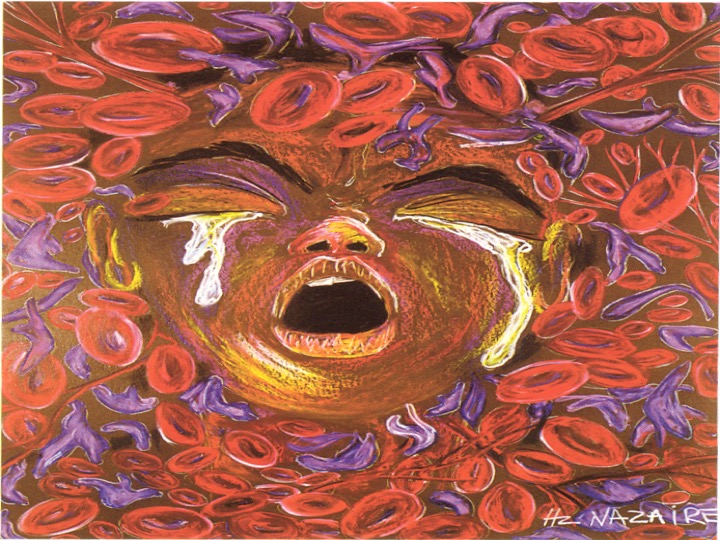
The difference for me from my patients, however, was that I had the luxury of talking about simply possessing the trait that would not have major implications for my life; at no point was I ever going to know the devastating pain, the life-altering complications, or the psychosocial anguish of the stigma associated with sickle cell disease.  That pain is severe and comparable to cancer pain, and is recurrent, chronic, and disabling for most people living with sickle cell disease.  The picture at the top of this post is called ‘Ten Redefined’ and is a graphic representation of what a 10 out of 10 on the pain scale feels like for a patient with sickle cell disease. This painting was done by an artist with sickle cell disease, Hertz Nazaire.

Though there were some aspects of my role as a director of a sickle cell program that I fully anticipated learning, I had no idea how much the experience would not only change my interactions with patients, but also provide perspective about health disparities, healthcare, and my general career path as a whole.  In medical training, we are forced to contend with learning everything there is to know about the human body and physiologic processes and then, what happens in the seemingly endless various pathological states; so it is easy to get caught up in the science of medical care during rigorous learning.  What most of us hopefully strive to do by the end of residency training is to start to incorporate the art of medical care and humanism into what we provide at the bedside.  However, there are some patients who have multiple chronic or complex conditions that are so complicated that even ongoing research and established standards of care have precluded finding options for treatment that are particularly satisfactory for patients or providers alike, and this sometimes creates tension between the art and science of medical care and with the humanism for which we strive. And, in this area of tension, is exactly where sickle cell disease and those living with it exist. And that aforementioned explanation is what I needed to create for why there is bias against people living with sickle cell disease from the medical community.

When I started my journey into the world of dedicated sickle cell care, I felt I had gained pretty significant experiences from my background.  I had grown up on a farm and attended a historically black undergrad (#FiskForever) and med school (#MeharryMade), and was most certainly aware of the plight of the underserved from a variety of experiences. I had taken care of patients who had little access to healthcare or resources to address medical concerns until they were uncontrolled or had proven nearly fatal.  Anyone needing a crash course on the impact of the social determinants of health can access one any day by taking a walk down Jefferson Street between Tennessee State University, Meharry, and Fisk in North Nashville and observing the environment; however, given the economic boom Nashville is undergoing, gentrification may soon extinguish this said crash course, but I digress.  I had then trained in Cincinnati in both Internal Medicine and Pediatrics and spent 2 years in inner city DC as well as 3 more years back home in Memphis in Orange Mound, leading a clinic in one of the most impoverished and under-resourced areas in the city.  What I had learned in those practice experiences, though, was that people will invest in themselves, their communities, and in the doctor-patient relationship if you are willing to do the same.  I had also learned that people are so much more than their past medical histories, their med lists, and even their social and family histories.  Every person has a story, and in that story is woven these social determinants.  What is now very plausible to me is this scenario for a patient: a lack of education because they lived in a dangerous neighborhood and couldn’t get to school without being accosted by gang members to join them; all of these issues feed into poor employment, lack of financial resources, and these issues marry living in food deserts and lead to having people with poor options buying salty chips as meal options when they already can’t afford to pay for meds for hypertension and they are dealing with PTSD from adverse childhood experiences, so they are self-medicating with nicotine and alcohol.  I thought I had it all figured out when I wandered into Sickle Cell World, but I only knew the tip of the iceberg…

What I would learn from my sickle cell patients is that, once they were no longer children and could advocate for themselves as adults by requesting pain medications based on 18, 20, 30, 40 years of living with a chronic, painful, debilitating disease and knowing what works to help to reduce (most often not alleviate) that pain, they would be labeled as a “drug seeker.”  Imagine if you expressed that you had trouble walking and were in excruciating pain, and people dressed in scrubs and white coats who are supposed to care about people crying out in agony said you were “faking it” because you would intermittently fall asleep amid requests for pain medications; what isn’t taken into account is, having been up all night in pain and missing sleep during pain crises, meds used for treatment cause severe drowsiness and somnolence. And what was most hurtful to hear from my sickle cell patients was that nobody was ever going to care about them because their skin was black.  It’s hard to argue with people who are telling the truth.  This is not the place to delve into the disproportionate and historical lack of federal funding for sickle cell disease as a more prevalent genetic disease affecting blacks than that provided to less prevalent genetic diseases affecting non-blacks, but one cannot possibly talk about sickle cell disease without addressing the inherent bias against its sufferers due to race, when racism is a foundational issue in this country.  I recently attended a health equity conference in which someone said that sickle cell disease is really the prototypical health disparity.  This perfectly summarizes my thoughts about being a sickle cell doc, and what this disease means in terms of race and health disparities in America.

On the flip side, however, I would learn that you don’t have to be black to care about people living with a “black person’s disease.”  I was very fortunate to have walked into a program that had been started by a former hospitalist at University of Chicago who saw a role for a care model that could address some of the needs for the sickle cell population on an outpatient basis and therefore, get to the “triple aim” and address not only the experience and quality of care for the patient, but also the cost of that care to the system as a whole.  What was that physician’s race?  White.  In fact, what was the race of the nurse practitioner I joined to take over for that physician, as well as the social worker who worked with them? Also white.  And the same goes for the nurse practitioner I eventually hired when our original NP left, as well as the amazing Department Chair who both championed the program and hired me for the job.  And I could not have asked for a more fierce team of advocates for our sickle cell patients or a more supportive, brilliant, and collegial group of fellow academic internists, proving that compassion can most certainly transcend race.

Being a sickle cell doc taught me about the business of medicine.  I suddenly became very popular among hospital committee members when I started taking care of patients with sickle cell disease.  It turns out that sickle cell care is, indeed, expensive.  This is when I would earn a personal quick degree in utilization management, and I would begin to understand how it plays a role in managed care, which has now become a career focus.  My foundation for my current work was built upon meetings with transfusion, high utilization, diversity, and medication safety committees.  The fortunate part of this experience was that the institution, the University of Chicago, situated on the South Side, also promotes and supports the importance of being connected with the community.  Therefore, there exists a good balance of addressing the business of the hospital with that of the community,  by participating in community health events while making presentations, providing education, or assisting with donation events.

Being a sickle cell doc’s most important lesson was how to be a passionate patient advocate.  This would prove to be important not only for my patients, but personally, when I made the decision to leave after 3.5 years, so that I could move home to Tennessee to be a patient advocate and “Dr Daughter” (my father’s term) for my dad when he was diagnosed with a terminal illness. When taking care of people who spend countless days, weeks, sometimes months of their lives in the hospital with a disease like sickle cell, you cannot help but get attached.  It would be nearly impossible not to imagine what it must be like to be given a diagnosis like sickle cell; it means facing a high risk of stroke during childhood, recurrent painful episodes throughout a lifetime that typically lasts only until the mid 40s, and potential complications of every possible organ system from head to toe. On top of all of the physical medical problems associated with the disease, the psychosocial hardships accompanying this diagnosis seem almost insurmountable. And yes, people with sickle cell disease can be a challenging group of people to care for – it is not a world full of unicorns and rainbows when taking care of people whose hallmark disease process is characterized by pain. I have had some of my worst days in clinic or in hospital suites with patients and family members explaining that everything that could be done is being done, but that “if you would just take this medicine every day, you might not have as many hospital stays.” But everything is about perspective.  I don’t know what I would do if I had missed most of my years of school or work because I was confined to a bed with a pain crisis. I do know that we did have patients who did everything the way they were supposed to do them – they took their meds religiously, did not get overexerted, stayed hydrated, and they still succumbed to the cruelty of this disease anyway.  I have taken care of a great deal of patients over the years and I have seen babies, elderly, and people of all ages pass away from horrible medical circumstances.  However, my most challenging experiences with death in my medical career have been during my time with our sickle cell team; developing a heart for sickle cell patients means also being vulnerable to having that heart-broken when a patient with whom you bonded so closely transitions.                                                                       What I learned from my sickle cell doc years was that sickle cell patients are like everyone else; they just want to be heard and they want to be validated.  They want to know that you understand that they are doing the best they can, knowing that their time here on earth is significantly limited compared to their peers.  They also want people who know better, like people who understand more by knowing them and their lived experiences, to do better.  So they taught me that it is not good enough to simply teach my colleagues and medical trainees about the pathophysiology of sickle cell disease.  I have to do better by calling out the fact that there is racial bias that precludes sickle cell patients from getting the pain relief and appropriate care they need when they seek emergency and inpatient treatment.  They taught me to speak out for them and to be a bullhorn for people who may not always have the opportunity to spread awareness about this terrible disease and the possibility of a cure.

THERE IS A CURE FOR SICKLE CELL DISEASE. 

What is that cure?  A bone marrow transplant.  It is especially difficult for people living with sickle cell disease to find donors for a multitude of reasons, but particularly because more minorities are always needed to sign up to provide the possibility of finding a match.  Signing up is easy and takes just a few minutes at: http://www.bethematch.org.

If you take nothing else from this lengthy post about my time as a sickle cell doc, please consider signing up to be a bone marrow donor. That one act could not only help cure someone living with sickle cell disease, but it might also be the answer for a child fighting cancer, and September is also Childhood Cancer Awareness Month. More to come on this subject at a later date. In the meantime, please checkout the Be the Match website today!

Defining Grandma Bernice: In Memory of Bernice Preyer Swift, 08/04/1918 – 01/05/1946

IMG_5764Her name was Bernice Preyer Swift. She was a mere 27 years old when a death certificate was completed on her time here. Her death left behind a daughter who had turned 7 only four days before her death, a younger 5-year-old daughter, and an even younger 3-year-old son to be parented by her bewildered husband, who already struggled to make ends meet as an uneducated laborer.
The story is told that she was apparently pregnant and not feeling well, and made it to John Gaston Hospital (the predecessor of Regional One), the city hospital where blacks were relegated for care in Memphis at that time, specifically, early January 1946. Unfortunately, she presented for care, and, despite demonstrating what must have been a tenuous state when she asked for help, that help never came. She persisted and waited for someone to provide care, but three days after coming in, she was dead.
That poor woman, who was notorious for being “camera-shy” and therefore sadly appears in no known family photographs, was my maternal grandmother, and her story is one that is held close to my heart. This year, August 4th marks what would have been her 100th birthday. There are many aspects of her story that are heart-wrenching, but what is particularly striking right now is that, despite the fact that she died over 72 years ago from pregnancy-related complications (eclampsia a.k.a. toxemia, given her death certificate listings), those of us in healthcare are fully engaged in conversations about concerning trends in maternal and infant death in Black women today.
Seven decades later, I find myself presenting statistics revealing that black women die from pregnancy-related complications at rates 3-4 times those of our white counterparts; what’s astonishing is that this health disparity is even worse than it was in 1850, when our ancestors were enslaved!  We are now actually having the hard conversations about the roles of racism and negative bias, which are the main issues implicated in this continuing trend.
It has always been this story of my grandmother that spurred my commitment to advocating for those who are underserved and marginalized, for my family knows too well the truth that Grandma Bernice died because she was poor and black in the Jim Crow South. Her story has been the reason I knew I would always want to expand my reach beyond the bedside and clinical care. She fuels the passion to be a megaphone for those people and organizations who are out on the front lines of our communities, working to see that the Bernice Swifts of the world are able to have access to health care, can find financial resources to buy medicines, can ensure that they are able to help support their households when they haven’t had a fair break with education, housing, or really any of the social determinants of health.
However, there are layers of how her premature death impacted our entire family. Her widow (my granddad) would almost never speak of his late wife and the pain and suffering of the experience of losing a young wife. This, coupled with the fact that we have no images of what our grandmother looked like, has always created a mystery of who she is and how we could best honor her legacy.  We only know bits and pieces that we have been able to find through stories of family members, like my grandmother’s brother and my mother’s favorite uncle, Uncle Booker.  Of course, I’m partial to his memory of her because he often said of me, “You are the spitting image of my sister Bernice!” Perhaps the fact that my birthday is separated by my grandmother’s by only 3 days has given me solace in feeling that we are almost kindred spirits, and perhaps there is almost a bit of Bernice reincarnate within my very being :-).”  My mother, her oldest child, also possesses memories of Grandma Bernice, but having just turned 7 years old only days prior to her death, she scarcely recalls subtleties such as her mother’s fear of thunderstorms and physical characteristics like jet black hair.  However, she also fondly recalls a time or two when she and her younger sister were vying for their mother’s attention when reciting alphabets and numbers.
Perhaps the memory that is most etched in our minds about Grandma Bernice is that her last words to her husband, Odell,  were “make sure you take care of my children.”  Once you hear this gut-wrenching emotional goodbye plea, you kind of feel like you know the essence of the character and spirit and just how beautiful this woman had to be, even without ever having laid eyes on her.
To this end of honoring her last wish, however, it was decided that her children would need to be cared for by their maternal grandmother, so off to New Jersey they went after saying goodbye at their mother’s funeral services. And this set in motion a sequence of events that led to multiple frequent moves among different family members in different cities and what must have been a tumultuous upbringing for my mother and her siblings.  In today’s standards, they most certainly would be considered to have been exposed to multiple adverse childhood experiences.  However, what their children and children’s children can proudly say is that they are nothing if not the poster children for RESILIENCE!
In all of this reflection on what should be a 100th birthday celebration, what remains is what would have been and what could have been for our Grandma Bernice. Some months ago, my sister and 2 female cousins agreed to embark on a journey with me (to complete the group of all four of Bernice’s granddaughters) on “Defining Bernice.”  This would mean trying to discover anything we could to learn more about the grandmother we would never know, and the mother our parents would barely, if at all, remember.  We have had enormous help with a distant cousin who is a skilled genealogist for our Preyer family (thanks, Dominique!) with gathering information on our family as a whole and adding context to the information we have on ancestry.com.  Unfortunately, we have had significant barriers to piecing together a picture of who our grandmother was because of the time in which she lived and the reality of how much our society didn’t value women and blacks enough back then to even care to document how they lived and died, or that they mattered at all.  For instance, her death certificate noted one location for her grave while her newspaper announcement had another.  In the end, neither site has grave markers, as it was not common for ‘colored’ people to have grave markers back then.  In attempting to find her burial site, neither cemetery exists any longer, and even if they did, there is no documentation of where she is buried, and there are no gravestones marking her final resting place.
Nevertheless, what we do have to define Bernice is our family spirit, and the story of 3 little children who lost their mother at a young and tender age, but triumphed over tragedy.  Today, those 3 children have children who have children; they have all almost tripled their mother’s years of life (nobody can be upset for ‘outing’ their ages, this can be discerned with simple math – lol.) Grandma Bernice’s widow remarried and had a family of his, hers, and theirs.
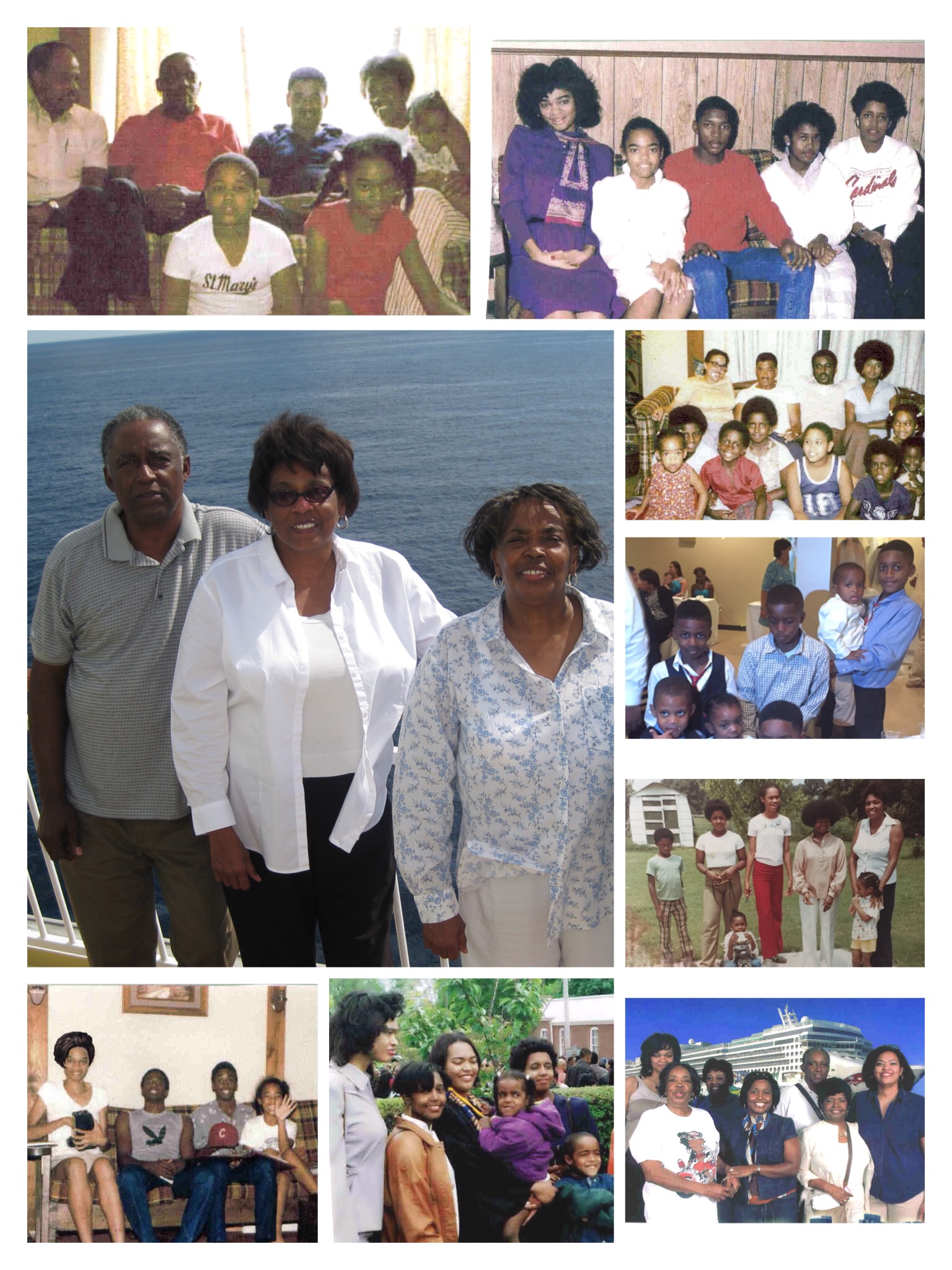
Those 3 children, however, went on to enjoy careers in teaching, the automotive industry, and with the postal service; they all were able to retire and have enjoyed traveling extensively in their Golden Years.  The picture above is a collage of the members of Grandma Bernice’s family; her 3 children are pictured together on a cruise in one of the pics.
Despite the troubling statistics with maternal death in black women, there have been obvious advances made since Grandma Bernice’s time.  Our parents endured Jim Crow, the Civil Rights Movement, desegregation, and beyond.  In return, they were able to experience something that our ancestors and our grandparents would only have dreamed of in the election of our first black president.  Although I could now delve into the way the tide has changed since that momentous occasion, I will choose to go in a different direction.
Because of these changes, even the very hospital where Grandma Bernice died is different.  Regional One (born of the old John Gaston) is now more committed than ever to providing care to all people, regardless of ability to pay; in fact, a year ago, they launched an initiative aimed at addressing social determinants of health such as housing insecurity to mitigate the impact of these issues, as they contribute to healthcare outcomes more than actual clinical care. (As an aside, years ago, a highlight of my career was being an attending physician at this facility, where I got to care for patients who were newborns just out of the womb to those who were experiencing end-of-life care. The irony of this time and the fact that my grandmother had taken her last breath here associated with pregnancy was not lost on me; it was a full-circle moment of time.)
What a joy it is to think that, just 2 generations later, the lives of Grandma Bernice’s granddaughters are so very different.  Because we each carry a little bit of Bernice within us, she has seen access to education and advanced degrees in each and every one of us.  Through us, she walks into a couple of Fortune 500 companies every weekday, in one as an account manager for the most well-known pharmacy in the United States, and in the other, as a physician executive for the largest insurance company in the country.  She also works tirelessly as an educator for our young people, teaching the children who will lead our future in the very city where she lived her own short life, while a few hours away, she guides and counsels students with special needs through the educational system, while ensuring that the system is also meeting the students’ needs.
And, outside of work, she has traveled the world, sometimes as a part of multiple family members with her children and grandchildren together.  Though we are not where we need to be and we have had setbacks, she has been able to vote, have her voice heard, learn that “No” is a complete sentence, and that a woman’s place is inside the kitchen, outside the kitchen, and just about anywhere she very well pleases!  She has also been able to experience love and loss, joy and heartache, passion and apathy.
Each of her granddaughters has journeyed past the age of her untimely death at 27.  Although I would like to say that we live in a different time in which we are more empowered to be able to advocate for better service and better care if we present in that tenuous state that Grandma Bernice did back in 1946, I really cannot confidently make that claim.
However, what I can say is that, because we hold her story and her memory so close, we appreciate the legacy of who she is and who our parents are, and perhaps this is the gift we are receiving from her on what would be her 100th birthday. When our busy lives give us more opportunity, we will most certainly continue to try to hunt down any possible leads on pictures of Grandma Bernice.  I’m sure we will also continue to search archives in libraries and investigate any information we can to further define Bernice.
In the meantime, every day, we get to define who she is a little more by our own living. More importantly, we get to celebrate the fact that, somewhere up there, she knows “My children are just fine.”

McStuffins Mommies, My Summer Vacation, and Some of the Fiercest Women I’m Lucky to Know!

Almost every woman I know grew up dreaming of what her wedding day, family, and general life as a wife and a mother would look like, complete with a timeline, guest list, and general theme with associated decor.  And almost every woman I know also had those plans shattered.  I don’t mean that in a sad and devastating way; I really mean it in an “If you want to make God laugh, tell him your plans” kind of way.

In my case, the plans were derailed early due to my desire to be a doctor from the time I was old enough to understand that a doctor was a healer.  What other job could anyone possibly want to do? Wasn’t this the ultimate? From early childhood, EVERYTHING became about an intense focus on getting the grades and exposure to get to the goal of being an MD.  There was no time to be worried about boys and fashion trends and being popular.  Was that gonna get me the ‘Doctor’ title?  And even after college when I needed to be planning for the predetermined goal of age 25 for marriage and having children, I couldn’t take any prospects seriously because ‘Mrs’ didn’t have the same ring to it as ‘Dr’.

And so, I was blessed and fortunate to have a village of my family (see previous posts on my parents & grandfather), friends, and supportive schools (#HBCUpride! #FiskTaughtMe/#MeharryMade) and training institutions (including Univ. of Cincinnati/Cincy Children’s) to get me to my long-awaited position as a physician.  However, once I got there, I realized that one could be a physician and also pursue other interests and talents!  Along the way to Physicianhood, I learned that there were these cool jobs like urban planning, community organizing, and child life specialization that would have offered fascinating career paths, as well. And in my career as a physician, I have discovered that the beautiful thing about Medicine is that there is so much learning and rediscovering that can be done continuously; it is truly a career that never gets boring. However, I have also learned that it is possible to nurture interests beyond medicine, like supporting the charitable work of nonprofits, developing event-planning skills, and even pursuing transient interests such as jewelry-making and scrapbooking.  Much like I learned that I can be a good wife, mother, and doctor, I have learned that following these interests never detracts from, but actually reinforces my calling and my heart for healthcare and advocacy for vulnerable populations.

But now that I am a truly ‘experienced’ physician, the coolest discovery I have had is that I am very much not alone in my diversity of interest in areas beyond medicine!  I am referencing a group of docs that has become a part of my trusted village – my McStuffins Mommies!  Just who are these wonderful women? These are my fellow women who tell our children, tongues-in-cheek, that we went to med school with Doc McStuffins, the character created by Disney that finally gave a shout-out to the fact that doctors do, indeed, come in a demographic of black females.  Why is this important, you might ask?  Because black female physicians make up less than 2% of the physician workforce in the US.  There aren’t that many of us, so there are not a great deal of people who can relate to similar and shared experiences of being black medicine women in America. So when there was a group that connected with Disney and Doc Mcstuffins (Hi, Artemis!), we were able to come together to share common experiences in many different areas, including being black female doc mommies!

This brings me to my recent summer vacation, cruising with my McStuffins Mommy friends and our families, courtesy of my med school friend, Valerie Berry (check out her website at valsdreamtravel.com and send her an email to plan a spectacular vacay.) Valerie is one such McStuffins Mommy and physician-turned-travel planner offering a pleasant and personalized travel experience. While prepping and enjoying this Disney Dream cruise, not only did I discover that my friend Valerie’s interests and talents extend far beyond medicine, I discovered that my other McStuffins Mommies had these same abilities!  Among us are extraordinary primary care and specialist docs, many of whom are married to other healthcare professionals (mention to my #MeharryMade husband) and are juggling motherhood, marriage/relationships, busy clinic/hospital/executive shifts.  These fierce women are mothers, aunties, grandmothers, and also entrepreneurs, authors, speakers, and general movers and shakers!  In our group alone, our trip of over 50 docs and family members was coordinated by a doc mommy, we wore shirts designed by our McStuffins Mommy and group creator, we exercised on the ship with our personal trainer/holistic medicine doc mommy, and enjoyed decorative cookies in our gift package from our fellow McStuffins Mommy.  The plethora of talents that emanates from this group of women has truly humbled me, and I am so proud to be able to say that I am a part of the McStuffins Mommies!

How pleased am I that I not only have met this group of women who can share advice about daycare, Kumon, implicit bias, health disparities, gender inequity in pay, and grueling residency training, but also about who to use as a publisher, the best places to travel for an anniversary trip, and how to best address a crowd about overcoming childhood trauma?  I am forever grateful for my fellow McStuffins Mommies who understand that we are not monolithic, yet we are a unique minority and few others can understand our shared experience of being black female physicians in (and in some cases, beyond) America! What I have learned years beyond my path to Medicine on this recent summer vacation was so very enlightening that I have to shout from the rooftops that not only are we #WomeninMedicine, we are #BlackWomeninMedicine, and we are also far #MorethanMedicine!

MLK50 in Memphis, May Days, & a Maiden Moore

April 4th was a highly-anticipated day for the Memphis community this year.  While our fair city became the somber backdrop of the remembrance of the assassination of Rev. King at the Lorraine Motel/Civil Rights Museum, I was busy doing something else; my mind was occupied with the best way to pay tribute to my late father during these festivities.

Back in 1968 while my mom was working and coming home to care for a toddler daughter, my dad was working and spending spare time involved in civil rights activities with various organizations.  As a matter of fact, when Rev. King came to the city on behalf of the sanitation workers who were courageously seeking fair wages and working conditions, my dad took up the fight and marched with them, although he was not a sanitation worker.  The fact that he believed in standing up for what was right, regardless of whether or not it directly impacted him is one of the values I most admired about him. My mother often says that my sister looks more like my dad, but that I act more like him; I tend to think that being active in social justice causes like this one is a characteristic that I inherited from him.

When the opportunity to march with the NAACP on MLK50 presented itself, I jumped at the chance to retrace my father’s footsteps with the organization to which he belonged as a lifetime member. Little did I know that we would file past the Universal Life Building that served as my dad’s employment base and as a bustling business hub for the black community for quite some time.  Left vacant for many years in downtown Memphis, the building had just been revitalized and reopened just prior to MLK50.  Above is a pic of my dad (he’s the tall one 🙂 ) with coworkers outside of the building in the 60s, and to the right are pics of the building as it stands today, with my pose in front of its antique signage.

Nearly 6 weeks after the remarkable event that brought numerous dignitaries, activists, and Common (he was the most notable figure for me, to my husband’s chagrin – lol) to Memphis, there has been a shift in focus to 10 days in May that will always hold major significance.  Those 10 days mark the period from my wedding anniversary to my late father’s birthday, and Mother’s day falls between them; talk about a roller coaster of emotions!  On one hand, I obviously love to re-live the one day when I got to be a princess (if you’ve never heard one of my favorite comedians, Jim Gaffigan, perform his stand-up on weddings, do yourself a favor and watch it on YouTube!) And marriage, although it is also a roller coaster, continues to be a beautiful institution to pay tribute; I’m planning on keeping my husband this week :-).  Mother’s day is priceless, coming on the heels of marital day memories, and words cannot begin to express the joy of the gift of being a mom.  On the other hand, though, as I look to this weekend and the 4th year without my dad’s presence on this Earthly side for his birthday, the void of his absence is heartbreaking.

And this brings me to the last point of this post. I happily took my husband’s name when I walked down the aisle nearly a decade ago.  However, because I have always been tremendously proud of the parents who raised me and the accomplishments I achieved with their support as a Moore, there was never a question that I would maintain my maiden name as part of my legal name. Sometimes that translates into people inadvertently adding a hyphen, which drives me bananas (I’ve just never cared for a hyphen for my personal use), and sometimes it means that people refer to me as the late actor Dudley Moore (which is actually just as fun and funny to me as people take it to be.)  Nonetheless, I’m pretty adamant about having my Moore continue to play a prominent role in my identity now more (Moore – ha!) than ever since my dad passed.  Now, integrated into my memories of my dad, MLK50, Memphis, and my personal May Days, the Maiden Moore is a critical part of my dad’s legacy.

Finding my Son’s Kerry Whipple

My memory, or lack thereof, is pretty horrendous. Nevertheless, I believe it was the end of the 3rd grade when I began to have my first big challenger. I know that the deal was sealed by 4th grade, and life was forever changed by then.  What happened?  There was a new student at Mt. Pisgah Elementary, and that student was Kerry Whipple.

Up until the time Kerry came to town (and yes, she was a Force, so I will refer to her accordingly), I had been able to easily establish myself as a head-of-the-class student pretty early each school year.  I was a teacher’s daughter, so supplemental learning at home with items designed for those several grades ahead was the rule.  However, the drive to be the best in the class was innate, and didn’t really require any external pressure from the Parentals.

So when Kerry came on the scene towards the end of my 3rd grade year (a year when I recall receiving my first ‘B’, which was pretty catastrophic within itself; geography has never been my thing), I had no idea that I was about to face quite the formidable opponent at our classroom academic standoffs!  I don’t recall exactly what they were, but we had some sort of competitions revolving around math or conjugation or something that involved completing challenges first, and Kerry Whipple and I went head-to-head.  She beat me in a few of those, and this was not something to which I was very accustomed, so I remember learning what intimidation was right then and there! And, by virtue of the competition, I decided she was my academic enemy – lol.

However, in a rather short period of time, we shared classes, and once I spent any meaningful time with her, I realized we had far too much in common to be anything less than good friends.  We eventually ended up with about the same amount of wins and losses in our different competitions, but I am grateful that she helped me to learn how to ‘up my game.’ Pictured above is a scene from our induction into the National Junior Honor Society, or something along those lines (please see the earlier reference to my memory!)

Over 30 years later, despite our lives diverging in very different paths and only keeping up on social media sporadically, I still consider her a treasured friend.  As a Southern communications specialist, I am constantly amazed by the voice that she gives to social justice in a place where I can’t imagine her opinion to be wildly popular.  What a blessing it is that she is one of the people who has been placed in my journey of life!

My son is not even close to the third grade yet, and is unfortunately at that age when he is failing to appreciate the merits of the kindergarten naptime.  However, as each school year brings a new group of classmates and friends, I share in his excitement for learning about each new teacher and student, and most certainly, who will be the class BFF and partner-in-silliness for the year!

What I am starting to realize, though, is that my son and I are very different.  Whereas my primary objective was to always demonstrate to my new teacher each year that I was going to be the star pupil of the class, I don’t think this is going to be my son’s major goal.  He is a very bright and energetic child, and he loves school.  But, he is far more interested in garnering laughs, being gregarious, fun-loving, and politically correct than “beating” his classmates in academic pursuits.  He would much rather make the teacher and his classmates cards when they are sick or sad than to be the one who wins at the big contest.

In all this time as he has been growing and as he has progressed from preschool to formal school, I have been anxiously waiting for my son’s Kerry Whipple.  I have been excited about the possibility of the person who will push him to push himself to strive harder, work faster, think more efficiently.  However, it’s enlightening to learn that this person may not come or even need to come and impact him in the same way that Kerry needed to be a part of my life.

One of the most sobering things about being a parent is that you really are responsible for shaping this little person’s experiences, and your influence has a lifelong impact.  As a pediatrician, I have purposefully sought out training on adverse childhood experiences and am considered ‘trauma informed’ about the long-term effect of adversity on children.  With this in mind, I’m particularly sensitive to everything to which my son is exposed; in this particular era, I am very sensitive to his exposure as a little black boy in the Southern region of the US.  But what I have realized more recently is that I don’t always have to get lost in the weeds.

Sometimes, I don’t have to be the one doing the teaching, and I can actually learn from him.  What does he want to learn?  Who does he want to be?  What is important for him in his class as he relates to his teachers and fellow classmates?

Maybe for my son, it will be a fellow athlete who runs faster or dribbles better; maybe it will be a classmate who designs a bridge in an unorthodox way.  Perhaps it will be a girl who challenges everything he has ever thought he knew about time, space, and dimension.  Who knows?  The lesson I am learning is that my son may not need the same Kerry Whipple that I needed, and that is perfectly fine.

#FiskTaughtMe

#FiskTaughtMe before I even set one foot on campus…

“I was just wondering if the full scholarship that you offered me still stands.”

It was late July, and I had taken part in a summer minority research program with a number of rising college freshmen who had interests in health professional careers. That experience with many students who were from backgrounds not dissimilar from my own made me take notice when they wistfully talked about where they would be going to college. Time and time again, they gleefully shouted “Hampton!”, Morehouse!”, Howard!” Having chosen to follow many of my majority classmates to our large state school, I didn’t have the heart to scream out “UT Knoxville!” (Disclaimer: I have nothing but good regard for UTK and those who chose to attend, should anyone mistake the pride for HBCUs as a slight for predominately majority institutions.)

And so on one day LATE in July, I sheepishly called Fisk and asked if I could still have the scholarship they had offered. Though my natural inclination is to over-think and assess and reassess decisions and live in a type A space, on that day, #FiskTaughtMe that sometimes you truly have to go with your gut.When I was told that, indeed, I could still attend on a full Presidential Scholarship, I made the decision to change my plans and go to Nashville for school. And, despite the fact that I had a class schedule, an ID card, paraphernalia, and my parents and I had weathered an orientation weekend to UT Knoxville weeks prior, move to Nashville is exactly what I did.

I had the privilege of growing up with particularly conscientious parents.  They knew that we attended majority public schools and would be influenced by what would be considered to be societal norms by our majority classmates.  But every other part of our lives was quite different.  We grew up in the African Methodist Episcopal Church, going to black dentists and doctors, and helped out with campaigns to elect black politicians within the Memphis community.  Both parents attended Lemoyne-Owen and supported alumni functions for their beloved HBCU (Go, Magicians!)  But even with all of this and the knowledge that my father had actively participated in Civil Rights Movement activities, including the march that brought Rev. King to Memphis, I had taken for granted just how important my racial and cultural heritage and identity were. All of that changed because #FiskTaughtMe.

Black history is ingrained in the Fisk Experience.  Unless there has been a drastic change,  students start learning about our African ancestry, the Middle Passage, and 400 years of enslavement and the legacy endured as a consequence practically from day one. Required reading for African-American Heritage and related classes includes a cross-section of some of the greatest black literary works, with the publications of Fisk’s son, W.E.B. DuBois, usually being among them.  However, reading about black history pales in comparison to experiencing it first-hand by being taught by a professor who lived pages right out of those books! This brings me to a caption of the photo for this post.  The picture featured here is of me receiving my degree from the Fisk University president, the late, great Dr. Rutherford H. Adkins.  Dr. Adkins was especially distinguished because he had served in the elite group known as the ‘Tuskegee Airmen’, the first black military aviators in the United States. The Tuskegee Airmen achieved an outstanding list of accomplishments during World War II, but experienced brutal racism in their home country, despite their success; however, their legacy would be one that led to the integration of the military in the United States. Dr. Adkins was just an overall delightful person, and I am so proud to have called him my Physics professor, my fraternity brother, and my University president.  He was one of the gems of my time at Fisk, and part of how #FiskTaughtMe pride in everything it means to be black in America.

The Fisk Experience means standing on the shoulders of W.E.B. DuBois, Ida B. Wells, John Hope Franklin, James Weldon Johnson, John Lewis, Diane Nash, Nikki Giovanni, and the like. It means being steeped in everything that embodies the spirit of fighting for racial equality and social justice. There’s little chance of escaping the spirit of embracing strategic protest when you attend the University that educated Lewis and Nash, two of the most prominent members of the Student Nonviolent Coordinating Committee (SNCC). SNCC’s role in empowering youth to spark the Nashville sit-ins to end racial segregation as a significant part of the Civil Rights Movement is indisputable.  To that end, #FiskTaughtMe the importance of standing up for what is right and speaking out against that which is unjust.

When I first arrived at Fisk, my style was…at the very least questionable.  I was a fan of hair bows, T-shirts, turtle necks, and most of all, Keds.  I mean, I rocked Keds HARD.  That was certainly my signature look, and I was clearly straight off the farm.  This look simply would not do at a HBCU, so suffice it to say, I was encouraged to ‘be better’ amid jest at my chosen attire, and among people who I swear could have stepped right out of a clothing ad on any given day when they were walking across ‘The Yard.’  So another thing #FiskTaughtMe was to dress for success.

Fisk has a beautiful memorial chapel with weekly services, and which serves as the venue for important university functions such as the Rev. Martin Luther King Convocation and the Jubilee Day Convocation – more to follow on Jubilee and the Jubilee singers below.  One of the ways that I felt like Fisk was my home away from home as a college student was the engagement by the chapel, the dean, and the worship services.  This helped to make me feel spiritually connected and less detached from my family values of Faith, Family, and Friends than I would have likely felt at other institutions. #FiskTaughtMe the importance of staying true to family values, even when away from family of origin.

#FiskTaughtMe rhythm.  Point, Blank, Period.  It’s embarrassing to say, but I really had never learned the concept of a ‘beat’ in music until I attended Fisk.  Sadly, I had played the piano since the age of 5 and also the organ throughout my teenage years, but somehow that cadence didn’t really translate to dancing or appreciating the latest CDs (well, this part is dating me.) The first times that my roommate and friends saw me dance, it was almost like they were watching a train wreck.  They were really almost somber and consoling, saying “Ohhhhhhh, what happened to you?  Who did this to you? You don’t hear that underlying beat?  Where did you go to high school, and who were your friends?” And so, multiple practice sessions later, I had gotten familiar with the concept of dancing to the rhythm, which is what I was going to need when I started considering Greek life…

One thing that cannot be discounted is the caliber of the students who attend Fisk.  I was awestruck by my classmates who were confident and outspoken and didn’t mind even debating with our professors, because they knew just how intelligent they were and dared someone question that fact. I recall that, in one class, we had to speak about an adversarial experience growing up or something of that nature, and I chose to speak about feeling out-of-place in school growing up because my friends didn’t look like me or understand what my culture was, but those who looked like me were not kind to nerdy and square me.  Well…you would have thought I told everybody off, because there was an onslaught of “Well, didn’t you have any black friends? Why didn’t you tell people to accept you for who you were?  Who would care that people didn’t like you because you were nerdy?” and much heated discussion ensued.  Just for sheer survival of that class, I had to make an executive decision to speak up and out and assert who I was and pushback to some of their (somewhat abrasive) assumptions.  In the end, because of experiences like those, I emerged a stronger person, and I can proudly proclaim that #FiskTaughtMe to stand up for myself and display more confidence.

The 5Pak was my little crew of 5 friends during our freshman year at Fisk.  It consisted of my roommate, our neighbors across the hall, and the woman who would become my BFF/Soror/Line Sister. We became each other’s support system rather quickly as we navigated this new college world, and sealed it by creating a cheesy group name, deciding on a signature song to which we created a dance routine (after my appropriate schooling – see above), and having the ever-so-classy airbrushed sweatshirts made with said group name accompanied by personalization for each of us.  After freshman year, we were eligible for pledging sororities, and I had the privilege of joining the first and the best of them all in Alpha KappaAlpha.  This experience allowed me to become close to women with whom I know I never would have talked otherwise, and I now consider myself infinitely blessed to have joined into this sisterhood with them for life.  Granted, I had a crash course in stepping and line-dancing due to my rather recent history of being in a rhythmless nation, but I was not alone, and 21 women of different backgrounds and coordination capabilities pulled off a mighty Fine Pi ∏ 🙂 probate show! To the point, though, is that even in today’s society where women are breaking ceilings in a way only dreamed in the past (although there is work still to be done), there continues to be an emphasis on the need for women to be focused on becoming wives and mothers above and beyond becoming bosses and revolutionaries.  As a wife and a mother, I am grateful to have those vital roles.  However, one belief that I hold quite fervently is that it is important to maintain a strong support system in your girlfriends. To quote Louisa May Alcott in Little Women, “I could never love anyone as I love my sisters.” Before there were the Women’s Marches for Equality, #FiskTaughtMe the importance of having my own voice, the power of sisterhood, and the necessity of having a strong support system.

I most certainly couldn’t talk about the Fisk Experience and Sisterhood without acknowledging the fact that #FiskTaughtMe that good guys do exist.  Although many of us didn’t recognize it then because most college ladies are busy looking for the fabled and exciting ‘bad boy’, many of us befriended and confided in the good guys who had our backs when those bad boys inevitably let us down.  These are the guys we have seen become successful with career and family and are still finding time to volunteer and give back to those who are less fortunate.  So, this is a shout out to those men, and they know who they are; we do see you, and we are proud that you are Fisk Sons who are Ever on the Altar.

#FiskTaughtMe to never underestimate the power of the young or even the few to make a powerful impact. Jubilee Hall, now a freshman ladies’ dormitory, was the first building erected for the education of freed slaves (clearly, I was a tour guide and orientation leader.)  It was named after the Jubilee Singers, a group of singers from Fisk who traveled the world in 1871 (5 years after the University was founded)  to raise funds for it to remain open.  Clearly, their efforts paid off.  The anniversary of that first world tour is celebrated in the chapel annually on Jubilee Day.

Fisk is home to the renowned Carl Van Vechten Art Gallery.  Housed there are works by Georgia O’Keefe, Picasso, Renoir, and many more highly regarded artists.  In addition to  art, Fisk offers a variety of musical lessons and choir offerings for students.  I was fortunate to have been able to take piano lessons and sing in a choir while a Fisk student, and I’m happy that #FiskTaughtMe to nurture an appreciation for the arts.

Perhaps one of the most important lessons that Fisk taught me is one that I am still learning today.  Because of Fisk, I was able to earn a Bachelor’s Degree and a Doctor of Medicine Degree in 7 years (as opposed to 8) through a joint program with Meharry Medical College.  I have been able to reinvent my career time and time again, having practiced clinical medicine with two different specialties for many years in different settings, worked as an assistant professor at an academic institution, and now as a physician executive in managed care.  I have been privileged with these experiences because #FiskTaughtMe that my education and career potential are limitless.  Fisk professors demonstrate an unparalleled commitment to investing in their students, and make that clear by motivating students to reach for the sky in personalized career guidance mentoring.  What has been even more exciting is to now be able to work with my Fisk classmates and other Fisk alum across multiple job sectors because they, too, have realized a degree of success that is also a result of our common experience of beginning the journey of our life’s work at Fisk University.  To say that I have Fisk Pride in everything that the University, my classmates, and other alumni represent would be a wild understatement.

I love Pink and Green and my Sisterhood of the First and the Finest.  However, have no qualms about it, I am a Daughter Ever on the Altar, tried and true, and in the end, my heart most certainly will always bleed Majestic Dear Old Gold & Blue. FISK FOREVER!

Of Elves on Shelves and other Christmas Traditions

This year I was convinced to start an Elf on the Shelf tradition for our son. It didn’t take much coercion, given that he’s at an age when almost anything can be magical, and the wonder and excitement that he has experienced as he searches for the place where the elf has landed from the North Pole every morning is priceless.

Of course, I realize that this is slowly becoming a part of what his holiday memories will be composed of years to come, along with Polar Express rides and Annual Cookie Decorating Parties with his friends.

What seems to inevitably happen, when discussing this with family and friends, is that we develop a rhythm that we’re not certain we knew we were developing as adults. It seems like one day, we were all younger adults and getting to know future spouses, explaining our memories of the holidays and what was special about what our parents did; the next, we had somehow inadvertently morphed into the adults, creating those memories for our own children. We started adulting, and there was no giant text alert or notification to tell us so!

I fondly remember my Christmas Eve worries…how could I get to sleep? If I didn’t get to sleep, how was the Sandman really gonna get me? (I can thank my older sister for that one.) Would Santa like the cake or cookies I made him? Would I get whatever crucial doll or nerdy gift I had wanted all year? To say I was born a Type A personality would be an understatement :-).

Now I get to see this time of year in a totally different light, through the eyes of my much more relaxed and happy-go-lucky son. Although he will certainly want to make sure that we leave cookies for Santa and that he says goodbye to the Elf tonight, all of the worry and ‘what ifs’ that I had are replaced by his silly, impish dancing and laughing about what he is confident will be a joyful Christmas morning. Which, incidentally, means that I have to stress all night over making it such and making sure we assemble and present everything from Santa in the perfect, memorable fashion!

In talking about holiday memories, my mother quips that she and my Dad loved Christmas and staying up late assembling and “testing” out all of the toys. I think I love hearing those stories because it helps to know that everyone is truly a kid at heart (and I use the word ‘kid’ cautiously, knowing my Dad is looking down and shaking his head; “kids are baby goats, Gina; use ‘children’ for people”.) And, not surprisingly, my Santa Dad did a good job of putting away any Christmas treats we baked for him!

So, tonight as we all stay up late quietly and secretly assembling and adulting for our childrens’ Christmas morning delights, I hope we all get the opportunity to soak it all in…the memories being created, the traditions slowly being solidified, and the moments that are truly priceless for children of all ages.